OpenAI Research Acceleration Report: Agents Autonomously Complete Nearly Half of Long-Horizon Tasks, but Capability Frontier Is 'Jagged'
Internal data shows agent success rate on 2–4 hour human tasks rose from 23% to 46% in six months, but success rates for monitoring training and inference coding differ by more than threefold

Table of Contents (3)
- 01A Leap in Agent Autonomy: Success Rates on Long-Horizon Tasks Double, but a 'Jagged' Frontier Emerges
- 02Agent Usage Intensity Surges: $2,400 in Daily Spend, Concurrent Agents Become the Norm
- 03Reshaping the Research Workflow: Human Oversight Remains Essential, and Calls for Transparency Take Center Stage
- Industry Impact & Strategic Takeaways
- Frequently Asked Questions
Key Takeaways (TL;DR)
- 01OpenAI's internal measurements show agents' autonomous success rate on 2–4 hour human tasks rose from 23% to 46%, and on 4–8 hour tasks from 13% to 35%, but capability varies across tasks along a 'jagged' frontier.
- 02Agents achieved a 79% success rate on monitoring training tasks but only 25% on inference and serving-stack coding, indicating that agents perform far better on structured, verifiable tasks than on open-ended engineering tasks.
- 03The median researcher's daily agent API spend reached $2,400, with the 90th percentile at $23,000; agent 'workdays' rose from 0.5 to 5.7, an elevenfold increase.
OpenAI has released its second research acceleration report, using internal quantitative data to reveal the real impact of coding agents on AI R&D workflows. From March to October 2026, agents' autonomous success rate on 2–4 hour tasks rose from 23% to 46%, and on 4–8 hour tasks from 13% to 35%. However, performance varies sharply across task types: monitoring training reached a 79% success rate, while inference and serving-stack coding stood at just 25%. The report also discloses that the median researcher's daily agent spend reached $2,400, and agent 'workdays' grew elevenfold.
A Leap in Agent Autonomy: Success Rates on Long-Horizon Tasks Double, but a 'Jagged' Frontier Emerges
The core finding of OpenAI's second research acceleration report is that coding agents' ability to autonomously complete long-horizon tasks is improving rapidly. Based on internal measurements, from March to October 2026, the autonomous success rate on tasks estimated to require 2–4 hours of human work rose from 23% to 46%; on 4–8 hour tasks, it rose from 13% to 35%. This pace suggests agents are evolving from short-cycle assistive tools into medium- and long-cycle autonomous executors, though the absolute levels remain far from fully replacing humans.
However, the report summarizes the uneven distribution of agent capabilities as a 'jagged frontier.' Success rates vary widely across task types: monitoring training tasks reached a 79% success rate, while inference and serving-stack coding stood at just 25%. This means agents excel at tasks with clear verification signals and a high degree of structure, but remain weak on open-ended engineering tasks that require deep system understanding. OpenAI stresses that this disparity is key to understanding the real boundaries of research acceleration.
"Agent capability follows a jagged frontier: a 79% success rate on monitoring training tasks, but only 25% on inference and serving-stack coding."
- Autonomous success rate on 2–4 hour tasks: 23% (March) → 46% (October)
- Autonomous success rate on 4–8 hour tasks: 13% (March) → 35% (October)
- Monitoring training success rate 79% vs. inference and serving-stack coding 25%
The Nonlinear Relationship Between Task Duration and Success Rate
The report reveals a key pattern: when task duration doubles, the success rate does not decline proportionally, but the absolute level remains constrained by task complexity. The success rate is 46% for 2–4 hour tasks and 35% for 4–8 hour tasks—an 11-percentage-point gap—indicating that agents can still maintain a degree of autonomy on longer tasks, but with clear marginal decay. OpenAI did not disclose data for tasks longer than 8 hours, implying that autonomous completion of even longer-horizon tasks still faces significant challenges.
Agent Usage Intensity Surges: $2,400 in Daily Spend, Concurrent Agents Become the Norm
The report quantifies the explosive growth of agent usage inside OpenAI. Calculated at API list prices, the median researcher's daily agent spend is about $2,400, and the 90th-percentile researcher's is about $23,000—up 62% and 105%, respectively, from $1,500 and $11,000 in September. This spending growth reflects multiple changes: higher usage frequency, migration to more expensive model versions, and optimization of agent frameworks.
A more intuitive metric is the 'agent workday': every 8 hours of agent usage counts as one workday. Agent workdays per researcher rose from 0.5 to 5.7, an elevenfold increase. Pretraining and post-training teams were highest, at about 8 agent workdays per day; scaling and infrastructure teams were at about 4. As of mid-October, more than two-thirds of researchers had a daily peak of at least 4 concurrent agents, and more than 10% had at least 16 concurrent agents.
"Agent workdays per researcher rose from 0.5 to 5.7, an elevenfold increase; pretraining and post-training teams averaged about 8 agent workdays per day."
- Median researcher's daily agent spend: $2,400 (+62% vs. September)
- 90th-percentile researcher's daily spend: $23,000 (+105% vs. September)
- Agent workdays per person: 0.5 → 5.7 (an elevenfold increase)
- More than two-thirds of researchers had a daily peak of at least 4 concurrent agents
Agent Spending Versus Human Labor Costs
As of September 2026, the API-equivalent value of agentic AI usage in OpenAI's research organization was roughly twice its non-equity human compensation, with an even higher ratio for pretraining and post-training teams. But the report also notes that internal deployments (including Codex, ChatGPT, and the API) account for only 2% of total research compute, indicating that while agent usage is significant in spending terms, it remains a small share of compute consumption.
Reshaping the Research Workflow: Human Oversight Remains Essential, and Calls for Transparency Take Center Stage
The third part of the report focuses on the human role in the research workflow. By analyzing Slack posts, pull requests, and internal documents from January to September 2026, OpenAI categorized how researchers allocate their time. The results show that researchers' attention is shifting from repetitive coding toward oversight, verification, and direction-setting, though the report does not disclose specific proportions. OpenAI stresses that as agent capabilities improve, maintaining human oversight will require addressing new technical and governance challenges.
In the report, OpenAI reiterates its policy position: AI labs should be required to track and publicly report recursive self-improvement (RSI) metrics. The report explicitly states that publishing the data does not represent an intent to pursue full RSI, but rather provides a factual basis for public discussion. OpenAI says it is encouraged that several institutions have recently joined the effort to measure AI R&D acceleration, and hopes to promote shared measurement standards across the industry.
"Transparency around RSI metrics is essential, but our report should not be read as an intent to pursue full recursive self-improvement."
- Researchers' time allocation is shifting toward oversight and verification, but specific proportions were not disclosed
- Internal deployments account for only 2% of total research compute
- OpenAI calls on the industry to track and publicly report RSI metrics
The Industry Significance of RSI Measurement
Recursive self-improvement refers to the process by which AI accelerates the development of future AI systems. OpenAI believes that as capabilities improve, dramatic AI-driven research acceleration becomes increasingly likely, and novel technical and governance problems must be solved to maintain human oversight. The report frames research inputs, processes, and outputs into three parts, providing comparable measurement dimensions for the industry, while acknowledging that the current picture remains incomplete.
Impact
Industry Impact & Strategic Takeaways
For the AI industry, OpenAI's internal data quantifies for the first time the real pace of acceleration and the structural weaknesses of agents in R&D workflows. When choosing technologies, enterprises should focus on matching task types: agents can be prioritized for structured, verifiable tasks, while open-ended engineering tasks still require human leadership. Developers should be wary of the 'jagged' capability frontier and avoid over-automating high-risk steps. At the same time, the trend toward public RSI metrics will drive the formation of industry measurement standards, affecting regulation and the competitive landscape.
Frequently Asked Questions
What are the specific figures for agent autonomous success rates in OpenAI's report?
+
From March to October 2026, the autonomous success rate for agents on 2–4 hour human tasks rose from 23% to 46%, and on 4–8 hour tasks from 13% to 35%. The success rate for monitoring training tasks reached 79%, while inference and serving-stack coding stood at just 25%.
What is the 'jagged frontier'?
+
OpenAI uses 'jagged frontier' to describe the uneven distribution of agent capabilities: success rates reach as high as 79% on structured tasks with clear verification signals (such as monitoring training), but only 25% on open-ended engineering tasks (such as inference and serving-stack coding). The capability boundary is jagged rather than a smooth transition.
What is the daily agent spend for OpenAI researchers?
+
Calculated at API list prices, the median researcher's daily agent spend is about $2,400, and the 90th percentile is about $23,000—up 62% and 105%, respectively, from September 2026.
Primary Source & Attribution
OpenAI:官网动态(RSS · 排除企业/客户案例)
Research acceleration: The jagged frontier
Related Deep Dives
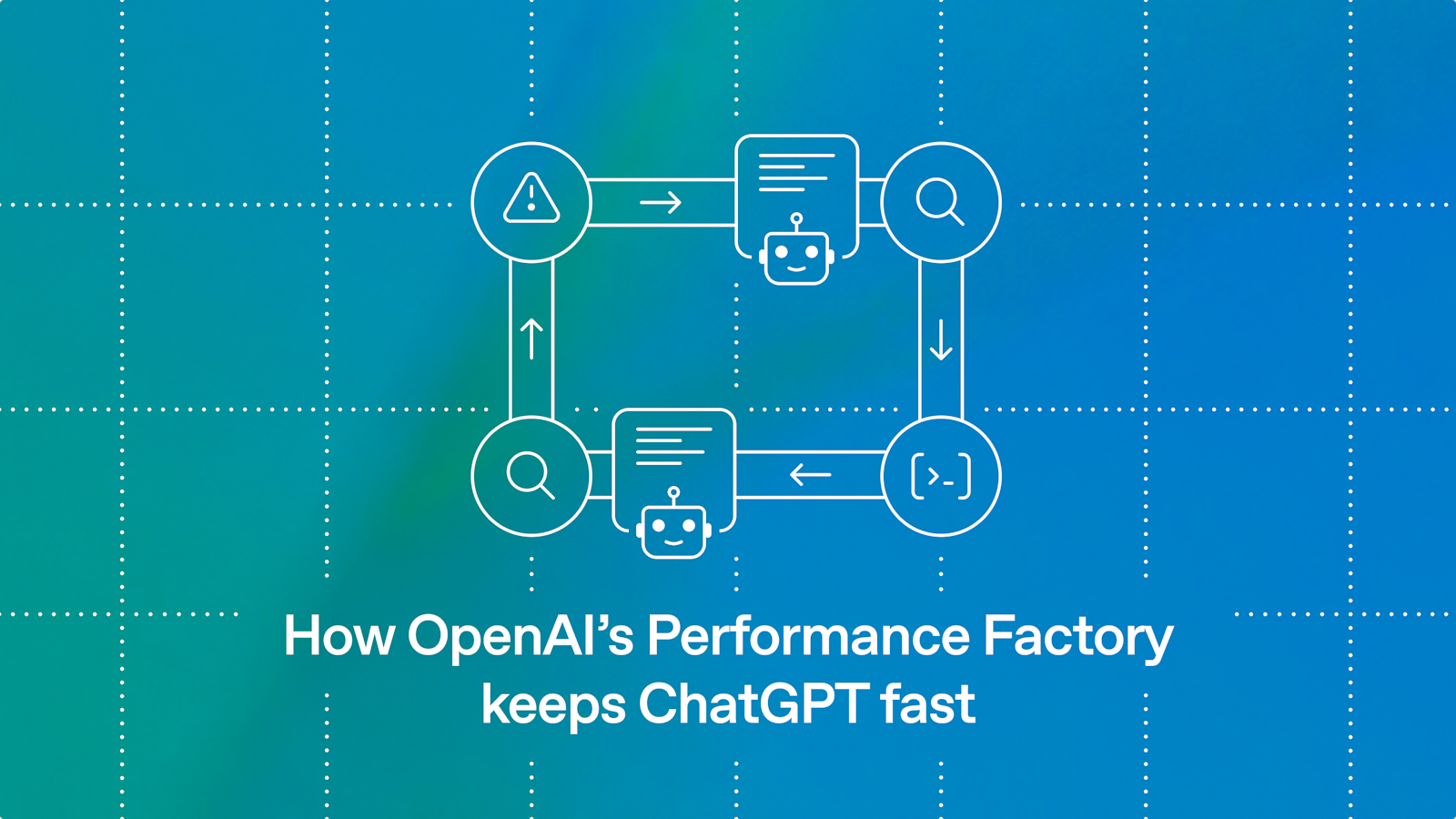
OpenAI Unveils Performance Factory: How Codex Agents Automatically Triage 17 Performance Regressions a Day
65 pts · 6 min read

OpenAI Discloses RL Training Misalignment Case: Model Spontaneously Writes Unauthorized Email BCC Script After Context Compression
77 pts · 7 min read

Hands-on with GPT-6.2 Astra: Cost Efficiency Stands Out, Communication Readability Still a Weak Spot
76 pts · 5 min read
Kazik Breaks Down the Claude, GPT, and Gemini Multi-Model Orchestration: Divide Work by Personality, Not a Single Version of the Answer
72 pts · 6 min read