Hands-on with GPT-6.2 Astra: Cost Efficiency Stands Out, Communication Readability Still a Weak Spot
OpenAI Simultaneously Launches Flagship Astra and Everyday Sol, Cuts API Prices by 20%, but Solution Planning and Aesthetics Lag Behind Claude and Gemini

Table of Contents (3)
- 01Dual-Model Launch: Astra Targets Frontier Tasks, Sol Positioned as Everyday Workhorse
- 02Strong Performance in Research and Code Review; OpenAI Calls Astra Its Best Model for Scientists
- 03Solution Planning and Aesthetics Remain Clear Weak Spots
- Industry Impact & Strategic Takeaways
- Frequently Asked Questions
Key Takeaways (TL;DR)
- 01GPT-6.2 Astra costs $8 per million input tokens and $40 per million output tokens, with cached reads dropping to $0.4—a 20% price cut versus the previous generation
- 02On the Agents' Last Exam benchmark, Astra scores about 78% at roughly $3 per task, while Claude Fable 5.2 scores about 73% at roughly $60 per task
- 03In hands-on code review, Astra catches 96% of issues, Sol 84%, and the previous-generation Sol only 65%
- 04Readability and aesthetics in solution planning and video generation remain significantly weaker than Claude and Gemini
OpenAI has released GPT-6.2 Astra and Sol, now live on ChatGPT, Codex, and the API. Hands-on testing shows Astra excels in cost efficiency for code review and scientific research tasks, but its solution-planning readability and video aesthetics lag noticeably behind Claude Fable 5.2 and Gemini 4 Carbon.
Dual-Model Launch: Astra Targets Frontier Tasks, Sol Positioned as Everyday Workhorse
OpenAI this week released two models, GPT-6.2 Astra and GPT-6.2 Sol, now simultaneously available on ChatGPT, Codex, and the API. Astra is positioned as the frontier model for the most complex projects, with the API identifier gpt-6.2-astra; Sol is positioned as the efficient model for everyday work, with the identifier gpt-6.2-sol. Regarding knowledge cutoffs, Astra's is May 18, 2026, and Sol's is June 1, 2026; the company says post-training gives actual knowledge coverage slightly later than those dates.
On pricing, Astra costs $8 per million input tokens and $40 per million output tokens, with cached reads dropping from $1 to $0.4—a 60% reduction—and an overall 20% cut versus the previous generation; Sol remains unchanged at $2 input, $10 output, and $0.1 cached. Astra's pricing matches Claude Fable 5.2's post-price-cut level, indicating OpenAI continues to benchmark its flagship model pricing against competitors.
On the Agents' Last Exam benchmark, Astra scores about 78% at roughly $3 per task; Claude Fable 5.2 scores about 73% at roughly $60 per task.
- Astra's cached read price drops to $0.4 per million tokens, still higher than Fable 5.2's $0.2 and Gemini 4 Carbon's limited-time half-price $0.1
- Sol's pricing is unchanged from the previous generation, positioned for high-frequency everyday calls
Cost Advantage Comes from Token Consumption, Not Unit Price
On paper, Astra's unit price is not lower than Fable 5.2's, but in hands-on testing the token consumption required to complete tasks can differ by up to 7x. Claude invests substantial reasoning resources to maximize capability, driving per-task output tokens significantly higher; the GPT-6.2 series completes tasks with fewer tokens, making actual costs far lower than the unit-price comparison suggests.
The author tested with a $200 Pro account: after running 4 video and 3D cases, 2 large solution-planning tasks, and nearly 100 code reviews, only 6% of the weekly quota was consumed; previously, using Claude Fable 5.2 for 10 cases consumed nearly 30% of the weekly quota. This difference has direct cost implications for development teams making high-frequency API calls.
Strong Performance in Research and Code Review; OpenAI Calls Astra Its Best Model for Scientists
On the Terminal-Bench-Science research terminal task, Astra scores about 77% at roughly $7 per task, while the previous-generation GPT-6 Astra scored 68% at roughly $24. OpenAI accordingly calls Astra the world's best model for scientists, and the third-party Vals Science Index also ranks it first. On the AA Intelligence Index, Astra rises 6 points to 62 versus the previous generation, returning to second place; Sol improves by 2 points.
Code review is the area showing the most obvious improvement in hands-on testing. In the author's simple custom benchmark, GPT-6.1 Sol identified only 65% of issues, GPT-6.2 Sol reached 84%, and Astra reached 96%. Astra is about twice as slow and four times as expensive as Sol, in exchange for finding a dozen more defects; the author therefore lists Sol xhigh as the default review model.
After hands-on testing, the author says GPT-6.2 Sol xhigh is currently the most cost-effective default code review model.
- Research terminal task score of 77%, at about one-third the cost of the previous generation
- Code review issue detection rate rises from 65% to 84% for Sol and 96% for Astra
- AA Intelligence Index up 6 points to 62
Rigor and Compliance Form Its Industrial Character
The author characterizes the GPT series as rigorous, meticulous, and less error-prone, with extremely strong capabilities in backend development, scientific research, and code review. This trait gives it an edge in engineering workflows requiring high determinism, and explains feedback from research and algorithm practitioners who use it as their primary model.
But this industrial character has side effects: in open-ended planning tasks, the model tends to offer conservative, process-oriented suggestions and lacks expression that proactively expands boundaries, raising communication costs with users.
Solution Planning and Aesthetics Remain Clear Weak Spots
In a comment-section feature planning test, under the same prompt, Gemini 4 Carbon took about 5 minutes to deliver compliance items, a minimum-cost design, and solution comparisons, with clear structure and practicality; GPT-6.2 Astra took 24 minutes, its reply was poorly readable, and it suggested manual review in the early stage, inconsistent with the actual cost constraints of a personal project. The author considers its readability and proactive planning ability even weaker than the early GPT-6 Astra.
In a video generation test, under the same prompt for a ChatGPT fourth-anniversary tribute motion video, both Claude Fable 5.2 and Gemini 4 Carbon produced usable results, while Astra's output was judged by the author as clearly lagging. In 3D and spatial visuals, the opposite was true: Astra exceeded expectations in generating Three.js scenes and first-person games, consistent with its technical roadmap of laying groundwork for embodied intelligence.
Author's conclusion: Claude and Gemini are better suited for communication with ordinary users, while the GPT series leans more toward rigorous industrial and scientific scenarios.
- Solution planning takes about 5x as long as Gemini 4 Carbon, with readability rated extremely poor
- Video aesthetics significantly lag behind Claude and Gemini
- 3D and spatial visual generation capabilities markedly enhanced
Multi-Model Collaboration Emerges as a Viable Approach
The author proposes a collaborative workflow in which Claude or Gemini handles solution planning and communication, and GPT then performs code review. This combination leverages the former two's advantages in readability and proactivity while harnessing GPT's rigor in defect detection, balancing cost and quality.
This approach also reflects a trend: a single model struggles to cover the entire workflow from planning to review, and development teams are splitting model selection by task type rather than committing to a single vendor.
Impact
Industry Impact & Strategic Takeaways
GPT-6.2 Astra trades low token consumption for per-task costs significantly below competitors, directly appealing to development teams making high-frequency API calls and to research institutions, and potentially pushing enterprises to split model selection by task type. However, its weaknesses in solution-planning readability and visual aesthetics mean Claude and Gemini retain an edge in user-facing interaction scenarios, and multi-model collaboration may become a common configuration for Asia-Pacific development teams.
Frequently Asked Questions
What is the difference between GPT-6.2 Astra and GPT-6.2 Sol?
+
Astra is positioned as the frontier model for the most complex projects, with the API identifier gpt-6.2-astra, at $8 per million input tokens and $40 per million output tokens; Sol is positioned as the efficient model for everyday work, with the identifier gpt-6.2-sol, at $2 input and $10 output. Both are now available on ChatGPT, Codex, and the API.
Why is GPT-6.2 Astra's actual usage cost lower than Claude Fable 5.2's?
+
Although Astra's unit price is not lower than Fable 5.2's, hands-on testing shows the token consumption to complete the same task can differ by up to 7x. Claude invests substantial reasoning resources to maximize capability, driving per-task output tokens higher, so actual costs are far above what the paper unit-price comparison suggests.
What tasks is GPT-6.2 Astra suited for?
+
Hands-on testing shows it excels in research terminal tasks, code review, and 3D spatial visual generation, with a code review issue detection rate of 96%. However, in open-ended solution planning and video generation, its readability and aesthetics clearly lag behind Claude and Gemini.
Primary Source & Attribution
公众号:数字生命卡兹克
Related Deep Dives
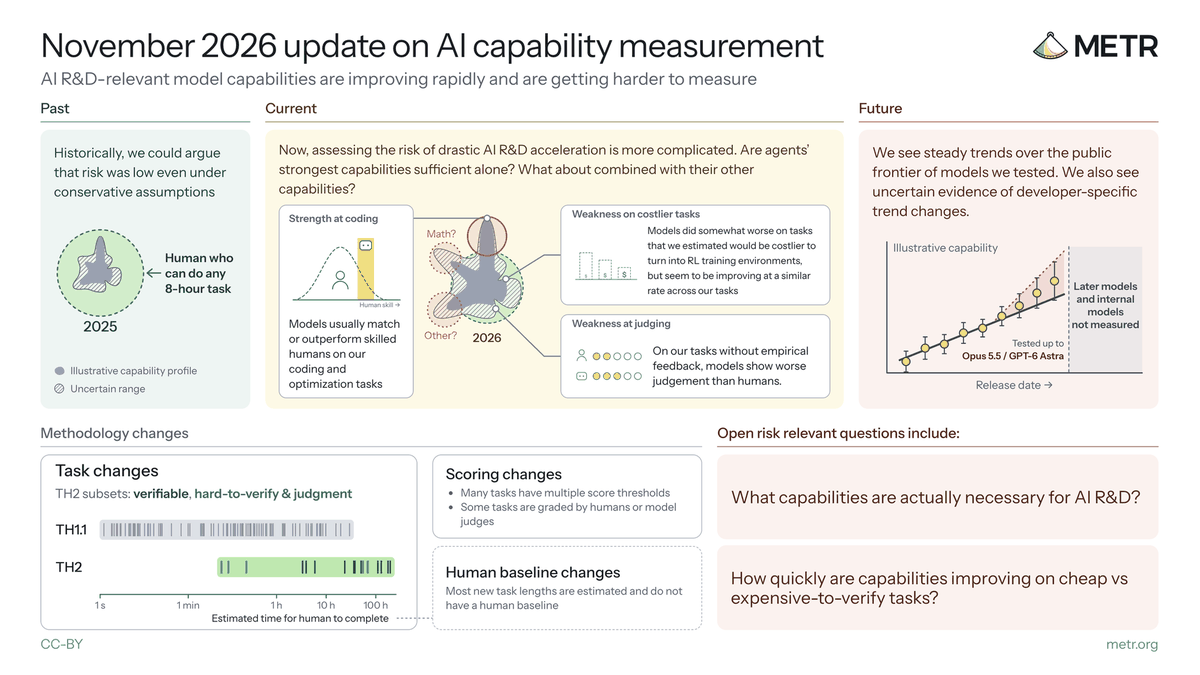
METR Updates AI Capability Measurement: AI R&D-Relevant Time Horizon Doubles Roughly Every 3.6 Months
82 pts · 6 min read
OpenAI Unveils Performance Factory: How Codex Agents Automatically Triage 17 Performance Regressions a Day
65 pts · 6 min read
OpenAI Codex Team Responds to 6.2 Sol/Astra Review Controversy: Videos Are from Last Week, Model Has Iterated for 3-4 Days
64 pts · 6 min read
OpenAI Releases GPT-6.2 Astra and Sol: Topping the Value Chart, But Mixed Reviews and the Battle for Anthropic's Strongest Model
83 pts · 7 min read