Kazik Breaks Down the Claude, GPT, and Gemini Multi-Model Orchestration: Divide Work by Personality, Not a Single Version of the Answer
Drawing on half a month of hands-on practice, the self-media author proposes an orchestration structure with Claude as commander-in-chief, Gemini generating proposals, and GPT handling backend and code review
Table of Contents (3)
- 01Communicability: The Overlooked but Critical Model Evaluation Dimension
- 02Orchestration Structure: Claude in the Middle, Gemini as Strategist, GPT for Hard Work
- 03Practical Insights: Multi-Model Collaboration Is More of a Management Problem
- Industry Impact & Strategic Takeaways
- Frequently Asked Questions
Key Takeaways (TL;DR)
- 01Kazik argues that all three models have shortcomings and that a single perfect model is unlikely to emerge; multi-model orchestration is fundamentally a management problem.
- 02The orchestration structure places Claude in the middle layer because its communicability is sufficient, its Harness experience is the best, and its aesthetic sense is the strongest.
- 03Gemini 4 Neon has the best communicability and creativity but is careless and prone to hallucinations, and its Harness experience is the worst.
- 04GPT delivers high information density in reports but poor readability; its strength lies in rigor, making it suitable for backend, algorithms, bug fixing, and code review.
Self-media author Kazik shares his method for getting Claude, GPT, and Gemini to work together: Claude Opus 5.5 serves as commander-in-chief, handling communication, task decomposition, and acceptance; Gemini 4 Neon acts as strategist, providing proposals and interface copy; GPT takes on backend, algorithms, bug fixing, and code review.
Communicability: The Overlooked but Critical Model Evaluation Dimension
The first concept Kazik introduces is "communicability," or human comprehensibility. He points out that model output reading like gibberish does not necessarily mean the model is weak, but AI is meant for human use, and users have the right to evaluate and express their likes and dislikes. Taking GPT-6.2 Astra as an example, he argues that if human collaboration is not considered, it is an excellent model, yet in actual use it has drawn considerable criticism.
He compares model collaboration to a workplace team: between a colleague who is technically strong but hard to understand in reports and one who is slightly less capable but can explain progress in three sentences, most people would prefer the latter. Citing a colleague's weekly report, he notes that GPT's analysis has the highest information density, but its priorities are unclear, it is verbose, and it places a heavy reading burden on the reader; Claude and Gemini's output is more readable, with Gemini preferred for visual presentations combining charts and text.
"The model saying something that reads like gibberish doesn't mean the model itself is bad—it's simply because the user is human."
- Communicability refers to whether model output can be quickly understood by humans, directly affecting willingness to use and sense of safety.
- Kazik believes attention is the user's most valuable asset, and poorly readable reports consume that asset.
Personality Profiles of the Three Models
In Kazik's description, Gemini 4 Neon ranks first in communicability, reads extremely comfortably, and provides emotional value; it excels at copywriting and creative brainstorming and has good aesthetic sense, but it is careless, has the strongest hallucinations of the three, and the Antigravity Harness product experience is poor. Claude communicates proactively but provides less emotional value than Gemini; its aesthetics and the Claude Code Harness are its strongest points, while its flaws are average rigor and sometimes missing details when making changes.
GPT is described as the least communicable of the three, with extremely high information density in reports that are nearly unreadable, low emotional intelligence, excessive obedience, and weak aesthetics; however, it is extremely rigorous in execution and reliable when task goals are clear, so backend, algorithms, bug detection and fixing, operations, and code review are all assigned to it, and it also excels at controlling browsers and applications.
Orchestration Structure: Claude in the Middle, Gemini as Strategist, GPT for Hard Work
Based on these personality judgments, Kazik's orchestration structure is: for large tasks, he talks almost exclusively to Claude, which understands requirements, decomposes tasks, does what it should do itself, delegates to GPT what should go to GPT, asks Gemini what should be asked of Gemini, and finally accepts all results and reports back in language he can understand. He notes that without Claude, Gemini 4 Neon can substitute, with slightly worse results but not by much.
He explains why Claude still occupies the middle position: this role must understand scattered requirements from above, translate them into tasks GPT can execute precisely, and distinguish genuine insight from careless misreadings in Gemini's confident suggestions. Therefore the middleman must simultaneously possess communicability, intelligence and initiative, and sufficient rigor. Gemini, though the easiest to talk to, is the most careless and has the worst Harness, making it unsuitable as commander-in-chief; GPT is too laborious to communicate with.
"In this diagram, I appear only twice: stating requirements and making the final call. Everything else is Claude running with Gemini and Codex."
- For major proposals, Claude and Gemini each independently produce one; Gemini receives only the original words and necessary background, not Claude's draft.
- Claude adds rules to CLAUDE.md and uses a self-built agy-ask script to call Gemini in the background for independent proposals.
- Frontend design is done by Claude itself, while copy and interaction are revised with Gemini's help, and backend block work is assigned to GPT-6.2 Astra.
The Full Chain from Proposal to Launch
Kazik describes the execution chain as follows: after Claude and Gemini independently produce proposals, Claude verifies which parts of Gemini's proposal are correct and which are not, then merges them with its own into a final proposal, which he approves. He says that over the past half month of practice, Gemini's thinking dimensions are indeed different from Claude's, and the two independent proposals almost always contain something the other missed, showing clear complementarity.
In the execution phase, frontend design is handled by Claude because of its strongest aesthetics; however, both Claude and GPT have the problem of not writing human-sounding copy and adding too much explanatory text, whereas Gemini's revisions are more concise. Backend block work goes to GPT-6.2 Astra, which opens a merge request reviewed by Codex for at most two rounds, followed by automated checks, merging, publishing, and online verification.
Practical Insights: Multi-Model Collaboration Is More of a Management Problem
Kazik explicitly states that a so-called perfect model as the definitive answer is unlikely to emerge in the future, and how to use the strongest few models to accomplish the most work has fundamentally become a management problem, with the key being to use the right model for the right task. This judgment is based on his comparison of the three models' communicability, rigor, aesthetics, and Harness experience.
He also emphasizes that this approach is transferable: even without all three models, with only GPT and Gemini, or even only Chinese domestic models, the principle of dividing work by task nature and having the more communicable model take the middle coordination role still applies. The agy-ask mentioned is a self-defined script of about 90 lines used to preset model selection, file operation restrictions, and answer specifications, making it convenient for Claude to call Gemini.
"How to use the strongest few models to accomplish the most work in the future has already become a management problem."
- The middle coordination role must simultaneously satisfy three conditions: communicability, intelligence and initiative, and rigor.
- Producing independent proposals and then merging them improves completeness and complementarity.
- Copy and interaction are common weaknesses of Claude and GPT, and can be revised by Gemini.
Impact
Industry Impact & Strategic Takeaways
For the Asia-Pacific AI industry, the value of this practical sharing lies not in recommending a particular model but in suggesting that enterprises should include communicability and Harness experience as selection dimensions when evaluating models, rather than looking only at benchmark scores. Multi-model orchestration is shifting from a technical problem to a process and role-design problem, which is instructive for enterprises building AI agent workflows, though the conclusions are based on one individual's half-month experience and require larger-scale validation.
Frequently Asked Questions
Why does Kazik make Claude rather than Gemini the commander-in-chief?
+
Because the middle coordination role must simultaneously possess communicability, intelligence and initiative, and rigor. Gemini, though the easiest to talk to, is the most careless and has the worst Harness experience; GPT is too laborious to communicate with; Claude's communication is sufficient, and combined with the strongest Harness and aesthetics, it is the most suitable overall.
How can users without Claude replicate this collaboration method?
+
Kazik says Gemini 4 Neon can substitute for Claude as the middle coordination role, with slightly worse results but not by much; even with only GPT and Gemini, the principle of dividing work by task nature still applies.
What is GPT mainly responsible for in this structure?
+
GPT handles backend, algorithms, bug detection and fixing, operations, and code review—hard work requiring rigor—and performs outstandingly in controlling browsers and applications.
Primary Source & Attribution
公众号:数字生命卡兹克
毫无保留地分享一下,我是如何让Claude、GPT和Gemini完美协同的。
Related Deep Dives
Kazik Publishes Two Prompts: Auditing Projects Against UX Principles and Unifying Motion Language
67 pts · 5 min read
Anthropic Stress-Tests Claude Docs with a Chaos Loop: 60 Errors in 2 Billion Requests, Resource Estimates Cut by 90%
79 pts · 7 min read
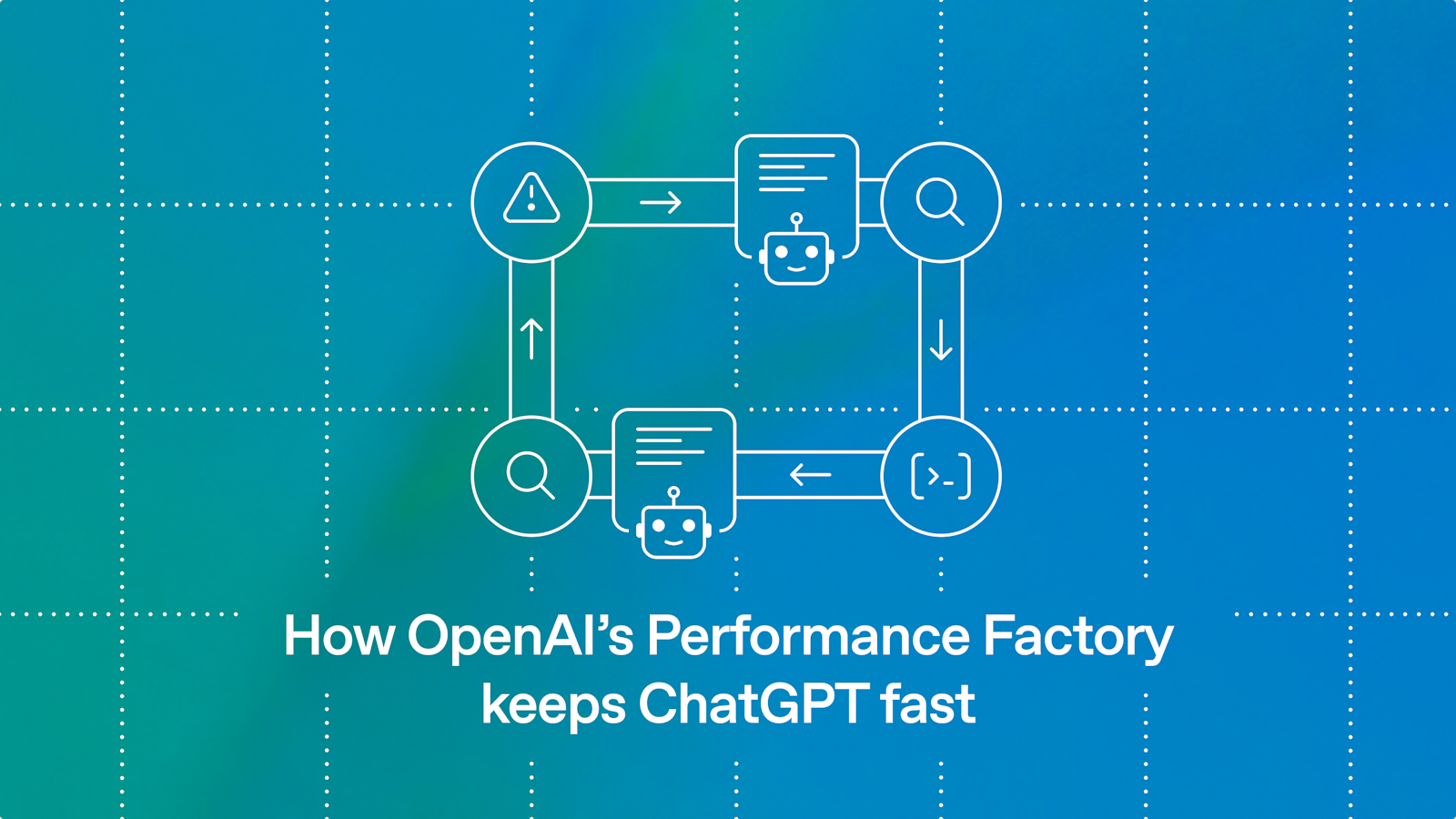
OpenAI Unveils Performance Factory: How Codex Agents Automatically Triage 17 Performance Regressions a Day
65 pts · 6 min read
Figma Specs and the Figma Agent Workflow: Turning Scattered Context into a Deliverable Development Plan
61 pts · 6 min read