Perplexity Rolls Out GPT-6.2 Astra and GPT-6.2 Sol, Publishes WANDR Benchmark Results
Astra scores 0.783 at about $12.54 per task; Sol scores 0.746 at about $2.65—both models improve on their predecessors
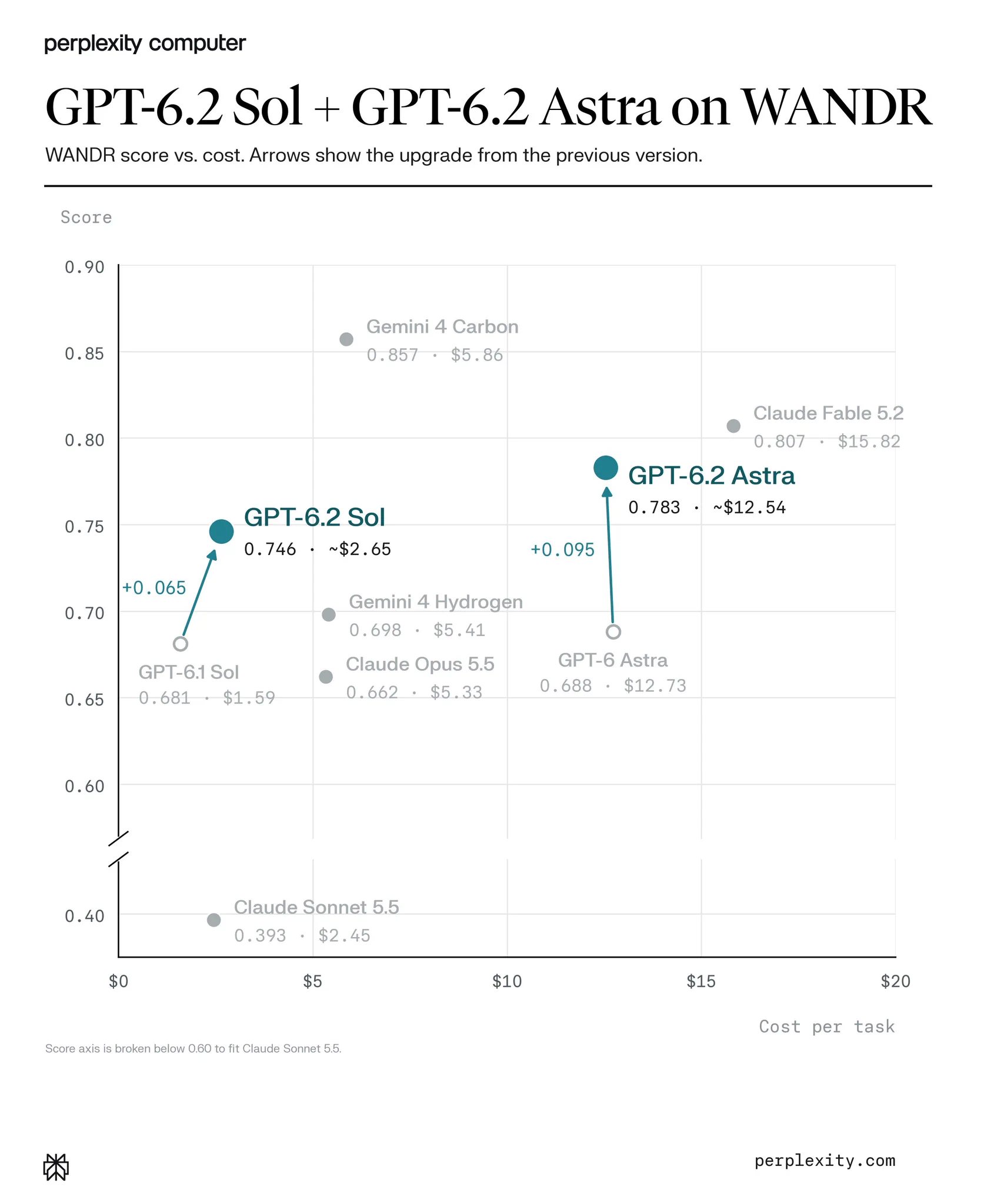
Table of Contents (4)
Key Takeaways (TL;DR)
- 01Perplexity announced that GPT-6.2 Astra and GPT-6.2 Sol are now available in Perplexity Search and Computer
- 02On the WANDR benchmark, Astra scores 0.783 at about $12.54 per task, up 0.095 from GPT-6 Astra
- 03Sol scores 0.746 at about $2.65 per task, up 0.065 from GPT-6.1 Sol
Perplexity has integrated GPT-6.2 Astra and GPT-6.2 Sol into Perplexity Search and Computer. On its in-house WANDR benchmark, Astra scores 0.783 at roughly $12.54 per task, a 0.095 gain over GPT-6 Astra; Sol scores 0.746 at about $2.65, a 0.065 improvement over GPT-6.1 Sol.
Two New Models Land in Perplexity Search and Computer
Perplexity disclosed via its official X account that GPT-6.2 Astra and GPT-6.2 Sol are now available in Perplexity Search and Computer. This means the platform has added two model versions tailored for retrieval and computer-operation scenarios alongside its existing model options, and users can invoke them directly within those products.
Perplexity did not specify the models' parameter counts, context lengths, or training details in the post, nor did it clarify whether they are available to all user tiers. The public disclosure focuses on scores on its in-house WANDR benchmark, per-task costs, and comparisons with predecessor models.
Perplexity says the two models are "now available in Perplexity Search and Computer."
- GPT-6.2 Astra and GPT-6.2 Sol are both integrated into Perplexity Search and Computer
- Official details on model parameters, context length, and availability tiers were not disclosed
What the WANDR Benchmark Measures
WANDR is Perplexity's in-house evaluation benchmark, and the results for both new models are presented on this benchmark. Because the benchmark is designed by the platform itself, its scores reflect model performance on tasks defined by Perplexity and are not directly comparable to general-purpose benchmarks published by other organizations.
Astra Scores 0.783 at About $12.54 per Task
On the WANDR benchmark, GPT-6.2 Astra achieves a score of 0.783 at a per-task cost of about $12.54. Compared with GPT-6 Astra, its score improves by 0.095, indicating that the same product line has gained ground on this benchmark after a version update.
In absolute terms, Astra is the higher-scoring and more expensive of the two new models. At over $12 per task, this version is better suited to scenarios that demand high result quality and have controllable task invocation frequency, rather than large-scale, high-frequency calls.
GPT-6.2 Astra: WANDR score 0.783, about $12.54 per task.
- WANDR score of 0.783, up 0.095 from GPT-6 Astra
- Per-task cost of about $12.54, the higher tier among the two new models
Sol Delivers a 0.746 Score for About $2.65
GPT-6.2 Sol scores 0.746 on the WANDR benchmark at a per-task cost of about $2.65, a 0.065 improvement over GPT-6.1 Sol. Its score is lower than Astra's, but its per-task cost is roughly one-fifth of the latter, creating a clear cost gradient.
By announcing the two models together, Perplexity effectively gives users an option to allocate compute according to task value: high-value tasks can use Astra, while routine or batch tasks can be handled by Sol. The official post did not elaborate on architectural or training differences between the two.
GPT-6.2 Sol: WANDR score 0.746, about $2.65 per task.
- WANDR score of 0.746, up 0.065 from GPT-6.1 Sol
- Per-task cost of about $2.65, a significant price gap with Astra
Why the In-House Benchmark and Cost Disclosure Matter
By providing both scores and per-task costs, along with deltas versus predecessor models, Perplexity enables outsiders to roughly compare the two tiers in terms of "performance per unit cost." For development teams building applications on APIs, this kind of cost framing is more useful than score rankings alone.
It is worth noting that WANDR is designed by Perplexity itself, and the task composition and scoring methodology were not detailed in the post. The figures should therefore be treated as results under the platform's internal methodology. Industry observers who wish to use them for cross-platform selection still need to validate them against other independent evaluations and real-world workloads.
Both models' results come from Perplexity's in-house WANDR benchmark; cross-platform comparisons should be made with caution.
- Official disclosure includes both scores and per-task costs, facilitating cost-effectiveness assessment
- WANDR is Perplexity's in-house benchmark; task composition and scoring methodology are not public
Impact
Industry Impact & Strategic Takeaways
This rollout shows that the coupling between model providers and search/agent products is deepening, with platforms increasingly presenting model value through in-house benchmarks and cost data. For development teams in Asia-Pacific, the price gap between Astra and Sol offers a way to tier invocations by task; however, since WANDR is a platform-specific methodology, selection should still be validated with independent evaluations and actual workloads rather than direct horizontal comparisons with other benchmark scores.
Frequently Asked Questions
Where can GPT-6.2 Astra and GPT-6.2 Sol be used?
+
According to Perplexity's official X post, both models are available in Perplexity Search and Computer.
What are the scores and costs of the two new models on the WANDR benchmark?
+
GPT-6.2 Astra scores 0.783 at about $12.54 per task, up 0.095 from GPT-6 Astra; GPT-6.2 Sol scores 0.746 at about $2.65, up 0.065 from GPT-6.1 Sol.
What is the WANDR benchmark?
+
WANDR is Perplexity's in-house evaluation benchmark. The official post did not disclose its task composition or scoring methodology, so its scores should not be directly compared with general-purpose benchmarks from other organizations.
Primary Source & Attribution
X:Perplexity (@perplexity_ai)
GPT-6.2 Astra and GPT-6.2 Sol are now available in Perplexity Search and Computer.
Related Deep Dives
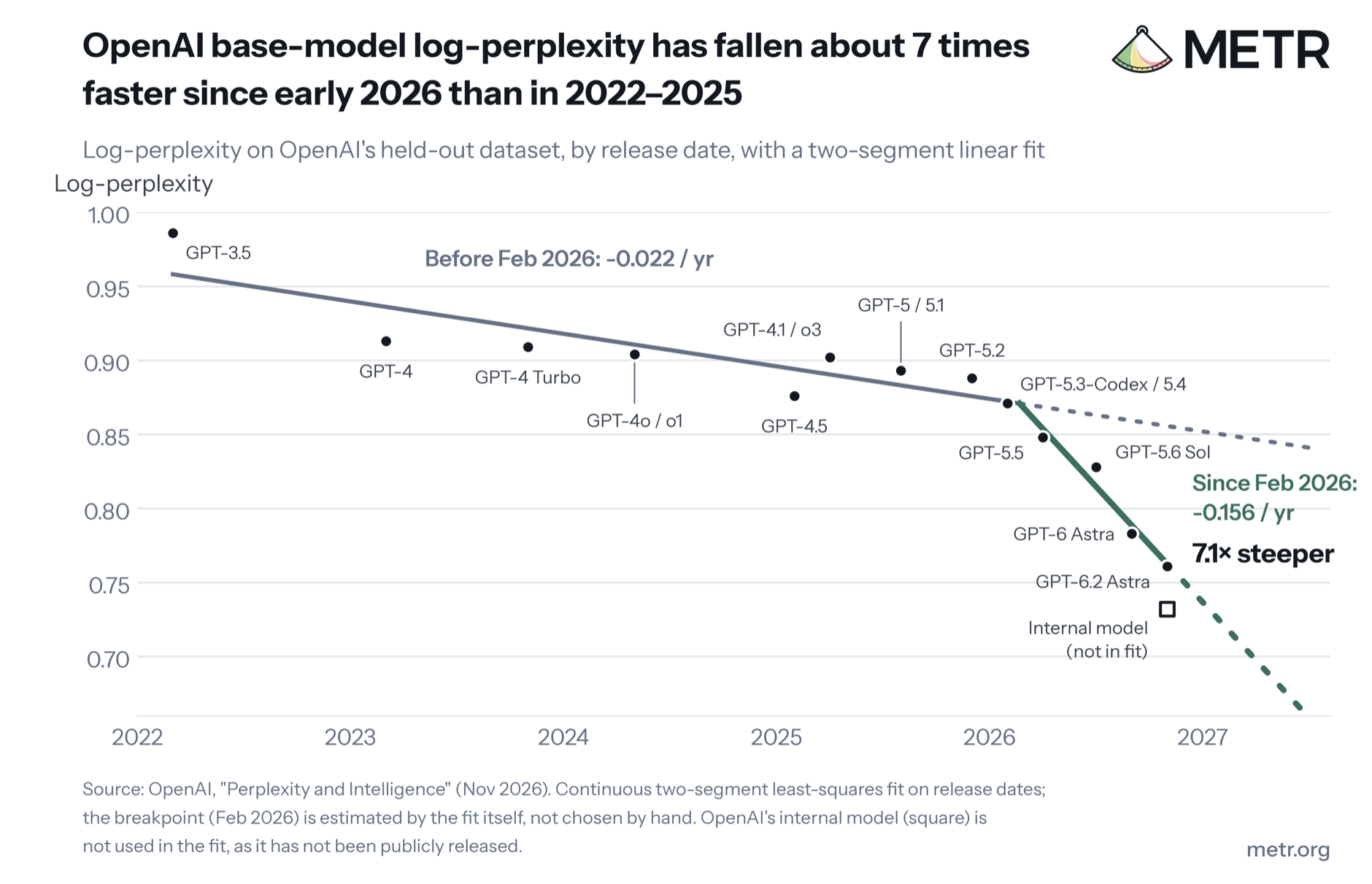
METR Interprets OpenAI's Pretraining Loss Acceleration: Decline Rate Since Early 2026 Is About 7x Faster
64 pts · 5 min read
OpenAI Proposes Perplexity as an Industry-Shared Metric and Releases Internal Pre-Training Measurements
63 pts · 5 min read
OpenAI Releases GPT-6.2 Astra and Sol: Topping the Value Chart, But Mixed Reviews and the Battle for Anthropic's Strongest Model
83 pts · 7 min read

Hands-on with GPT-6.2 Astra: Cost Efficiency Stands Out, Communication Readability Still a Weak Spot
76 pts · 5 min read