OpenHands Details Its CVE Software Factory: How AI Agents Automatically Patch Their Own Image Vulnerabilities
The team hands most CVE remediation to an agent pipeline, needing only one Slack message and a handful of PRs to review each day
Table of Contents (4)
Key Takeaways (TL;DR)
- 01OpenHands delegates most CVE remediation to an AI agent pipeline, with humans reviewing only a few PRs and a single daily Slack summary.
- 02The pipeline first auto-generates an image inventory from Helm charts, then scans with both Trivy and Grype to cover each other's blind spots.
- 03The team argues CVE remediation is objectively measurable—vulnerability counts fall without breakage—making it a strong fit for agent takeover.
The OpenHands team has disclosed its automated CVE remediation pipeline: AI agents select fixes, open PRs, merge low-risk items, and track deployments, while humans read just one Slack message of up to 11 lines and a few PRs each day. The team believes at least 80% of CVE remediation work can be handled by autonomous agents.
Why CVE Remediation Is a Good Fit for AI Agents
In an official blog post, the OpenHands team notes that 17,050 new CVEs were published in October 2026—roughly 550 per day, nearly four times the October 2025 figure and a single-month record. Vulnerability disclosure far outpaces a team's ability to triage manually, yet the backlog work is often routine: bump a version number, rebuild an image, confirm nothing breaks.
Author Dylan Jacoby divides AI use at work into three categories: assisted operations, information synthesis, and full outsourcing. CVE remediation falls into the third: handing the task entirely to agents with minimal human involvement. He estimates that at least 80% of CVE remediation work can be done by autonomous agents, with humans only reviewing specific changes and making judgment calls.
"I genuinely believe at least 80% of CVE remediation work can be handled by autonomous agents, with humans only reviewing specific changes and making judgment calls."
- 17,050 new CVEs were published in October 2026, about 550 per day
- OpenHands has handed most remediation work to an agent workflow
- Humans read just one Slack message and review a few PRs each day
An Objectively Measurable Engineering Task
Much engineering work is hard to score—whether a refactor is better or documentation is clearer is often a matter of opinion. CVE remediation is different: with a scanning pipeline in place, vulnerabilities are visible when reported and disappear once fixes ship. As long as the count falls without breakage, the work passes. At a time when the industry is debating how to measure AI output quality, this verifiable mechanism is precisely why the team chose this scenario.
Step One: Auto-Generating the Image Inventory
Before agents can run, the team needs a complete inventory of deliverables covering every deployed image, including third-party images such as Redis and Keycloak. A hand-maintained inventory goes stale the moment someone adds a service or dependency, so OpenHands generates the inventory automatically on every vulnerability scan.
Because OpenHands can be deployed to Kubernetes environments, the team already has Helm charts recording every image customers might introduce. A script checks out the Helm charts at the latest release tag, renders them with all optional components enabled, collects every image that could be deployed, and feeds them into the scanning pipeline. For other Kubernetes users, the inventory can also come from lockfiles, Dockerfiles, and manifests in production repositories, or from container registries, internal package proxies, and live clusters.
An inventory can't be handwritten: it goes stale the first time someone adds a service or dependency.
- The inventory is generated automatically on every vulnerability scan, avoiding stale manual lists
- Helm charts are rendered with all optional components enabled to cover every image
- Alternative sources include production repositories, container registries, package proxies, and live clusters
Step Two: Dual-Tool Scanning to Cover Blind Spots
The team scans every image with both Trivy and Grype. The two use different vulnerability data and inspect different locations, each catching issues the other misses. In a November 17 scan of two older public images, redis:6.0.5 and python:3.9.0-slim, Trivy reported 630 vulnerabilities and Grype reported 743; together they found 462 in common, covering 911 distinct vulnerabilities.
The gap stems from tool blind spots. Grype can identify packages not installed via a package manager, yielding 36 extra findings in the Redis image; Trivy can read version information from Go programs, catching a vulnerability in the Go version bundled in Redis's gosu helper. Scans run daily in GitHub Actions, and results are committed to the scan-results branch, including a summary per image, the fix version for each vulnerability, and a daily trend snapshot.
Every vulnerability tool has blind spots—and the other tool may cover exactly those.
- Trivy and Grype together found 911 distinct vulnerabilities across the sample images
- 462 were found by both, 168 only by Trivy, and 281 only by Grype
- Scan results are committed daily to the scan-results branch for agents to read
Step Three: Constraining What Humans Read
The team considers this the most important decision in the whole process. Security teams are already drowning in human- and AI-generated information, so OpenHands defines up front what people will see—and what they will never see. Dashboards, charts, and vulnerability tables have their place, but in a month like October, the team only needs to see the numbers fall quickly and safely.
So no one reads the pipeline's raw scan output—thousands of lines of JSON organized for agent consumption. Each day people read just two things: one Slack message and at most three PRs. The author says the fixed daily workload and the capped Slack message length directly reduce cognitive load. The workflow was open-sourced at the OpenHands Teams launch and is available as the GitHub CVE Remediation Factory automation template.
A fixed daily workload and a capped message length directly reduce cognitive load.
- Humans read just one Slack message and at most three PRs per day
- Raw scan output is thousands of lines of JSON, consumed only by agents
- The workflow is open source and available as an automation template
Impact
Industry Impact & Strategic Takeaways
This case offers the Asia-Pacific AI industry a replicable paradigm for agent outsourcing: choose engineering tasks with objectively verifiable outcomes, use dual-tool scanning to reduce blind spots, and enforce strict limits on human reading to control cognitive load. For enterprises evaluating where to deploy AI agents, high-frequency, routine, verifiable work like CVE remediation may reach high automation rates sooner than open-ended R&D tasks.
Frequently Asked Questions
What do humans still do in OpenHands' CVE pipeline?
+
Each day humans read one Slack message and at most three PRs, review specific changes, and make judgment calls; the agents handle the rest—fixing, opening PRs, merging low-risk items, and tracking deployments.
Why does OpenHands scan with both Trivy and Grype?
+
The two use different vulnerability data and inspect different locations, so their blind spots complement each other. In the example, together they found 911 distinct vulnerabilities; a single tool would have missed a substantial share.
Can this workflow be used for other tech stacks?
+
Yes. The team has open-sourced the workflow as the GitHub CVE Remediation Factory template, and the image inventory can also come from production repositories, container registries, package proxies, or live clusters.
Primary Source & Attribution
OpenHands 官方博客
Inside our CVE software factory: how OpenHands patches its own images
Related Deep Dives
Anthropic Stress-Tests Claude Docs with a Chaos Loop: 60 Errors in 2 Billion Requests, Resource Estimates Cut by 90%
79 pts · 7 min read

Runway Reveals Its Agentic Software Factory: AI Agents Drive 38% of Merged PRs, First-Approval Wait Drops to 5 Minutes
77 pts · 7 min read
Kazik Breaks Down the Claude, GPT, and Gemini Multi-Model Orchestration: Divide Work by Personality, Not a Single Version of the Answer
72 pts · 6 min read
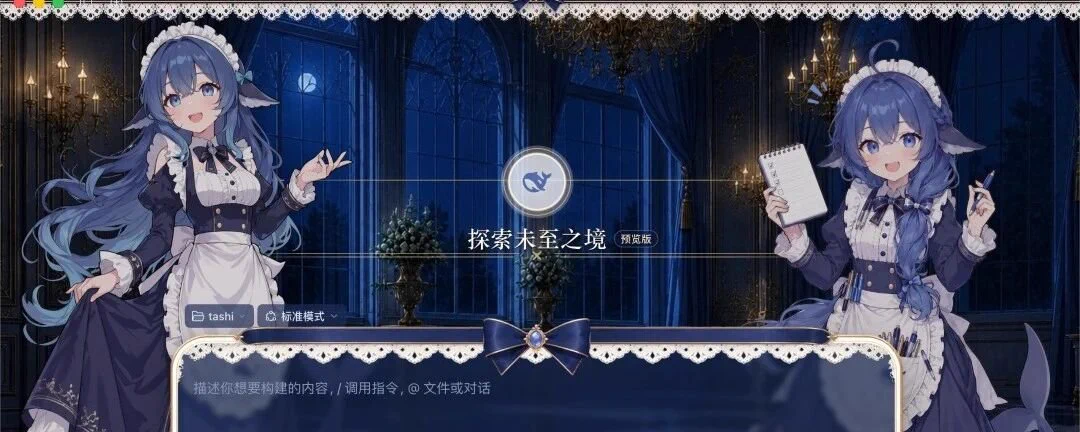
DeepSeek Harness at 100 Days: How 13 Plugin Use Cases Are Reshaping AI Workflows
71 pts · 5 min read