Google Brings Gemini 4 Hydrogen to Global Search, Calling It the Largest Model Upgrade Yet
Upgrade covers four improvements: intent understanding, query fan-out, visual and adaptive responses, and multilingual capabilities
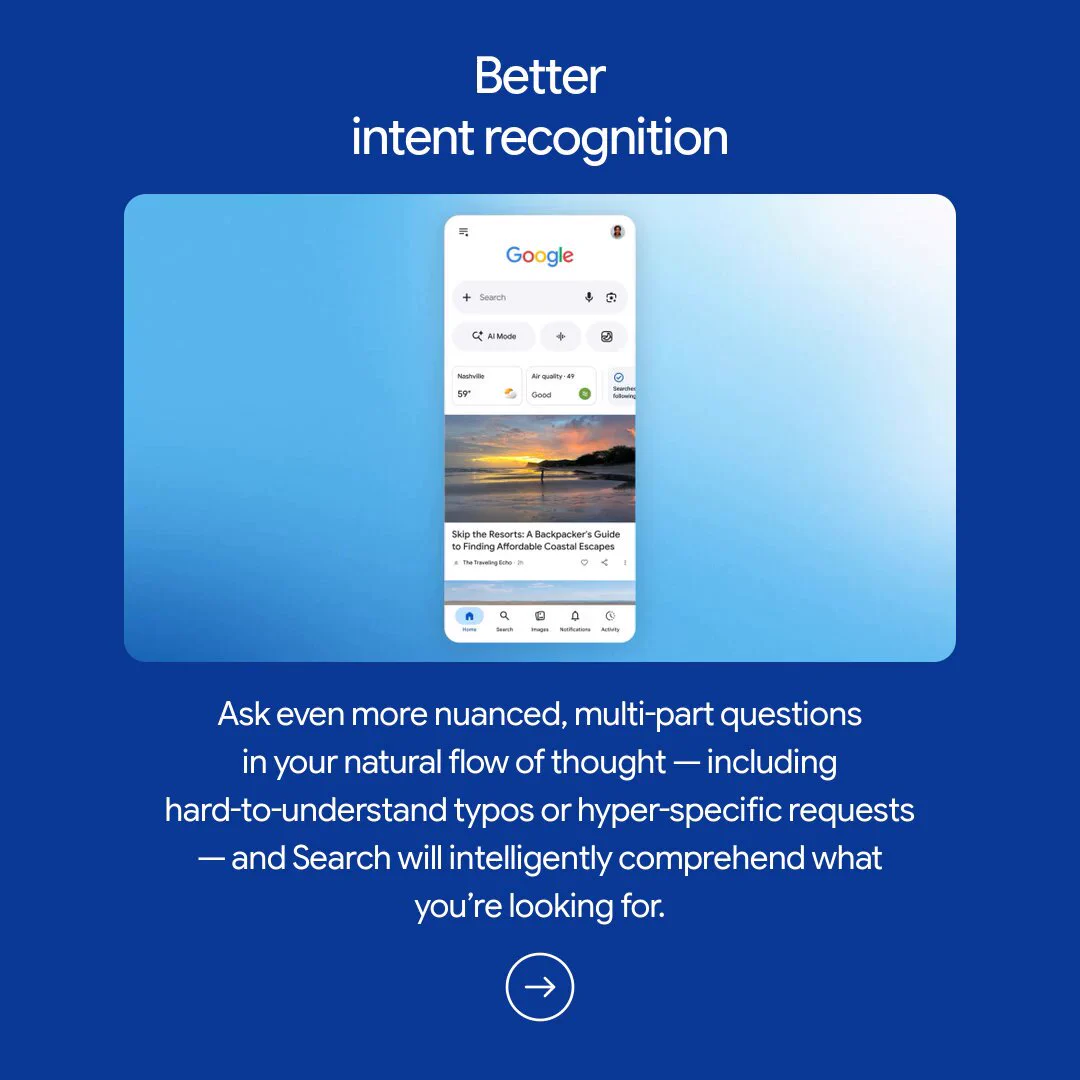
Table of Contents (3)
Key Takeaways (TL;DR)
- 01Google says Gemini 4 Hydrogen is now available to Google Search users worldwide, positioning it as the largest model upgrade to Search to date.
- 02The four improvements disclosed are intent understanding, query fan-out and linking, visual and adaptive responses, and multilingual capabilities.
- 03Google published a full breakdown in a page-by-page graphic format but did not provide a regional rollout timeline or performance benchmark figures in the post.
Google has announced that Gemini 4 Hydrogen is now live in Google Search worldwide, calling it the largest model upgrade to Search to date. The company lists four changes: more accurate understanding of user intent, smarter query fan-out and linking, more visual and adaptive responses, and richer multilingual support.
Four Upgrades Target Search's Intent Understanding and Result Organization
Google announced via its official X account that Gemini 4 Hydrogen is now live in Google Search worldwide, calling it the largest model upgrade to Search to date. The official post summarizes the changes into four areas: better understanding of user intent, smarter query fan-out and linking, more visual and adaptive responses, and richer multilingual capabilities. These statements all come from Google's own description; the post does not include a regional rollout timeline or performance benchmark data.
Judging from the wording, the focus of this upgrade falls on the early stages of the search process and the presentation layer. Intent understanding and query fan-out belong to the query parsing and result organization stages, while visual and adaptive responses concern the form in which answers are presented. Google also provided a full breakdown in a page-by-page graphic format, but the public post itself only lists directional descriptions and does not disclose model parameters, training data, or specific evaluation results, so outsiders cannot yet make quantitative comparisons of the upgrade's magnitude.
Google's official post: Gemini 4 Hydrogen is live in Google Search globally, and it calls this the largest model upgrade to Search to date.
- The four official improvements: intent understanding, query fan-out and linking, visual and adaptive responses, and multilingual capabilities.
- Google positions this upgrade as the largest model upgrade to Search to date.
- The post does not provide a regional rollout timeline, model specifications, or benchmark figures.
Query Fan-Out and Linking: Adjustments to How Search Results Are Organized
Among the four improvements, query fan-out and linking is closest to the underlying workings of a search engine. This mechanism typically refers to breaking a single query into multiple sub-queries to retrieve in parallel, then reorganizing the results into a coherent answer. Google says the new model is smarter at this stage, implying that the system's decomposition of complex, multi-intent queries and its linking of sources may be more granular, but the company did not explain the specific implementation or scope of coverage.
Multilingual and Visual Responses Target Global Users
Multilingual capability is listed as one of the four improvements, echoing the 'global rollout' language. For the Asia-Pacific market, multilingual support directly affects the quality of answers to non-English queries, especially in a region with many languages where a single query often mixes multiple languages. Google did not specify in the post which languages are new or enhanced, nor did it provide performance differences across languages, so the actual experience remains for users to compare themselves.
Visual and adaptive responses point to changes in the form of answers. Google says responses will be more visual and adaptive, but it did not disclose the trigger conditions, presentation components, or how they connect with existing search features. For content publishers and search optimization professionals, this direction means the information density and layout of results pages may continue to adjust, though current public information is insufficient to judge the specific impact on traffic distribution.
Among the four official improvements, multilingual capability and visual responses directly correspond to the query experience of users worldwide.
- Multilingual capability was announced alongside the global rollout, but specific enhanced languages are not listed.
- The trigger conditions and presentation methods for visual and adaptive responses are not explained in the post.
User Feedback: Answer Length and Conciseness Remain Points of Contention
Under the same post where Google announced the rollout, a user commented that when they only wanted a one-line answer, the system still output a large block of text. This feedback points to a long-standing trade-off in search AI answers: the more detailed the response, the more likely it is to deviate from users' expectations of a concise answer. Google lists 'adaptive' as an improvement direction this time, but did not say whether it offers control options for answer length.
Observations on the Search Ecosystem and AI Product Competition
Embedding frontier models directly into Search has been Google's main approach to its search product in recent years. Framing this as the 'largest model upgrade' shows the company still sees Search as the largest-scale entry point for large language model deployment. For websites and content platforms that rely on search traffic, stronger answer generation typically means click behavior on results pages may continue to change, but the specific magnitude will need to be verified with traffic data after rollout.
On the AI product competition front, Google chose to announce the upgrade first via its official social media account and then supplement details with a graphic breakdown, a cadence that leans toward product operations rather than a technical launch. The post does not mention API availability, developer pricing, or enterprise arrangements, indicating this adjustment is mainly aimed at the consumer search experience. Market observers believe what is worth watching next is regional performance differences and whether the company supplements technical details.
Google did not provide model specifications, benchmark figures, or a regional timeline in the announcement, so the magnitude of the upgrade cannot yet be quantitatively compared.
- The upgrade focuses on the consumer Search experience; the post does not cover API or enterprise arrangements.
- Google has not published a regional rollout timeline or performance benchmarks; actual effects await user verification.
Impact
Industry Impact & Strategic Takeaways
For the global search ecosystem, further embedding frontier models into Search means the boundary between answer generation and result organization continues to blur, and content publishers need to reassess the traffic structure coming from search. For the Asia-Pacific market, multilingual capability is listed as an upgrade priority, and the quality of answers to non-English queries may change accordingly, but Google has not disclosed specific languages or regional differences. For the AI industry, this move shows Google still uses Search as the largest-scale distribution channel for large language models, and the competitive focus at the consumer entry point continues to shift toward answer quality and presentation form.
Frequently Asked Questions
What specific changes does Gemini 4 Hydrogen bring to Google Search?
+
According to Google's official post, the changes include better understanding of user intent, smarter query fan-out and linking, more visual and adaptive responses, and richer multilingual capabilities—four in total.
Has this upgrade already rolled out globally?
+
Google says Gemini 4 Hydrogen is now live in Google Search worldwide, but the post does not provide a regional timeline or disclose specific performance differences by region.
Has Google published model specifications or benchmark data?
+
The public post only lists directional improvements and does not disclose model parameters, training data, benchmark figures, or API and enterprise arrangements.
Primary Source & Attribution
X:Google (@Google)
Gemini 4 Hydrogen is live in Google Search globally 🚀
Related Deep Dives

Gemini for Mac Launches Computer Use: Agent Can Execute Tasks Across Apps While Users Retain Control
71 pts · 5 min read
Google Launches Genie 4 Real-Time World Model on Gemini API and AI Studio
71 pts · 4 min read
Google Opens Gemini Tasks Free to Six Countries Including US, Japan, and Korea, Enabling Calls and Payments
80 pts · 6 min read
Google Workspace MCP servers and gwscli reach GA, Personal mode enables one-click setup with no credit card required
73 pts · 5 min read