Google Looks Back on a Decade of Duplex: Gemini Tasks Launches Automated Calls to Businesses This Week
From closed-domain neural pipelines to a unified Gemini architecture, how Duplex solved the latency and pragmatics challenges of real-time phone conversations
Table of Contents (3)
- 01From Closed Domains to Gemini Tasks: Duplex's Functional Boundaries Keep Expanding
- 02Three Generations of Conversational Architecture: From Custom Neural Pipelines to a Unified Gemini Stack
- 03The Technical Barriers of Real-Time Phone Calls: Pragmatic Grounding and Sub-Second Latency
- Industry Impact & Strategic Takeaways
- Frequently Asked Questions
Key Takeaways (TL;DR)
- 01This week, Google introduced Duplex in Tasks within the Gemini app, enabling it to call businesses on users' behalf to handle real-world matters such as reservations and inquiries.
- 02The Duplex architecture has evolved through three generations: closed-domain models from the pre-LLM era, an early hybrid stack of generative models, and the current stack in which Gemini unifies multimodal understanding, planning, and dialogue generation.
- 03The core challenges of real-time phone calls lie in pragmatic grounding and sub-second latency, requiring natural conversational rhythm to be maintained in noisy acoustic environments.
This week, Google launched Duplex-powered automated calls to businesses within the Tasks feature of the Gemini app, and looked back on nearly a decade of architectural evolution: from closed-domain models and hybrid generation stacks to a unified Gemini stack that completes real-world tasks through low-latency speech understanding and pragmatic reasoning.
From Closed Domains to Gemini Tasks: Duplex's Functional Boundaries Keep Expanding
Google Research disclosed this week that Duplex has launched as a Tasks feature in the Gemini app, positioned as a personal AI collaboration tool that can call businesses on users' behalf and handle real-world requests. The launch marks an expansion of Duplex from the narrow scenarios it supported early on, such as restaurant reservations, to broader autonomous task completion. The article notes that when Duplex was introduced nearly a decade ago, the goal was to let AI complete time-consuming errands over the phone in a respectful manner. Real-time phone conversations are fast-paced and rarely follow a script; the other party may change what they say at any moment, and people also rely on subtle shifts in tone to judge whose turn it is to speak.
As its capabilities expanded, Duplex was gradually integrated into Google's core products. During the pandemic, when business hours and services were changing rapidly, Duplex strengthened automatic verification of merchant information to keep listings accurate; as of data disclosed in 2023, business information sourced from Duplex calls had been shown more than one trillion times in Search and Maps. At the same time, Google worked with its Android and hardware teams to launch Call Assist features across five consecutive generations of Pixel devices starting in 2019, with related models continuing to support Call Screen and Hold for Me. In 2025 and 2026, foundation models further unlocked agentic calling capabilities in Search and Ask Maps, enabling inquiries about quotes, product inventory, and service availability.
"Real-time phone conversations are fast-paced and rarely follow a script—a half-second pause sounds like a dropped line, while speaking too early means talking over each other."
- Duplex launched this week in Tasks within the Gemini app, enabling it to call businesses on users' behalf to complete real-world matters.
- Business information sourced from Duplex calls has been shown more than one trillion times in Search and Maps (2023 data).
- Five consecutive generations of Pixel devices have featured Call Assist-related capabilities since 2019.
Positioning as a Personal AI Collaboration Tool Within Tasks
Google describes Tasks in the Gemini app as a personal AI collaboration tool that can help coordinate real-world errands, such as calling businesses on users' behalf and handling requests for them. This framing elevates Duplex from a single calling feature to an agentic capability spanning task types. Behind it, the system no longer relies on building a separate dialogue model for each task category; instead, it is prompted through free-text task descriptions, allowing the model to generalize to new task types and business categories.
Three Generations of Conversational Architecture: From Custom Neural Pipelines to a Unified Gemini Stack
The article divides the evolution of Duplex's technology stack over the past decade into three eras. The first generation was closed-domain models from the pre-LLM era: Duplex's development predates modern language models and even the invention of the transformer. To ensure a good experience for both businesses and users, the system was confined to narrow domains and trained custom recurrent neural network models on anonymized task-specific phone conversations. Because there was no pretrained world knowledge, the team relied on large amounts of training data for each task type—for example, distinguishing the rigid flow of a restaurant reservation from an inquiry about holiday hours.
The second generation was the early generative model and hybrid stack. In 2022, Duplex used LaMDA in real-time calls; pretrained models simplified understanding and commonsense reasoning, enabling the system to handle unexpected conversational turns and off-topic content while staying grounded in contexts such as restaurant reservations. But early generative models were less predictable and slower, so the team built a hybrid stack that used generative models for flexible phrasing alongside deterministic state tracking and strict policy guardrails. The third generation moved toward unbounded tasks and Gemini integration: as foundation models advanced, the system shifted to being prompted with free-text task descriptions, removing fixed vertical-domain limits and allowing the model to generalize to new task types and nuanced requirements, such as requesting a window seat or leaving room for a stroller.
"Our calling stack uses Gemini to unify multimodal understanding, planning, and dialogue generation, enabling the system to handle requests with multiple constraints."
- First generation: closed-domain custom recurrent neural networks relying on task-specific training data.
- Second generation: LaMDA introduced in 2022, forming a hybrid stack with deterministic state tracking and policy guardrails.
- Third generation: Gemini unifies multimodal understanding, planning, and dialogue generation, supporting free-text task prompts.
The Transitional Value of the Hybrid Stack
In the second-generation architecture, Google did not simply replace all components with generative models; it retained deterministic state tracking and strict policy guardrails. This design choice reflected the limitations of early generative models in predictability and speed: flexible phrasing was handled by generative models, while task state and policy boundaries were controlled by deterministic components, striking a balance between experience and reliability. This hybrid approach also provided the engineering foundation for the subsequent transition to a unified Gemini stack.
The Technical Barriers of Real-Time Phone Calls: Pragmatic Grounding and Sub-Second Latency
Even with frontier models, real-time phone calls still pose challenges that cannot be solved by pretraining solely on standard datasets such as the web. The first is pragmatic grounding and understanding of real intent: web data cannot fully capture how a call with a busy business unfolds, and nearly a decade of experience with goal-oriented calls helps the system grasp pragmatic norms—even before a call begins, it can match a task to a business based on past conversation history, for example knowing that a certain business does not accept large group reservations on weekends, and thereby predict whether the task is feasible. During the call, the model uses this to judge what is appropriate to ask at the moment, how to interpret a polite indirect refusal, and how to keep the call brief and effective.
The second is sub-second latency in noisy acoustic environments. Calls are transmitted over compressed phone lines, and the background may include clattering kitchen dishes, espresso machines, street noise, and nearby conversations. The system is tuned for low-latency streaming inference so that responses land at a natural rhythm; custom acoustic and conversational rhythm models help the core AI system handle background noise and pauses, stopping speech when expected. The article emphasizes that Duplex must serve both the business answering the phone and the user, a principle that has shaped many design choices.
"Web data cannot fully capture how a call with a busy business unfolds—nearly a decade of experience helps the system grasp pragmatic norms."
- Pragmatic grounding relies on nearly a decade of goal-oriented calling experience, enabling task feasibility to be predicted before a call.
- The system is tuned for low-latency streaming inference to cope with compressed phone lines and noisy backgrounds.
- Custom acoustic and conversational rhythm models help handle background noise, pauses, and turn-taking.
Design Principles for the Experience on Both Ends
Google points out that Duplex must work as well for the business answering the phone as it does for the user, a principle that has influenced many design choices. This means the system must not only understand the user's task intent but also follow the conversational conventions and politeness norms on the business side during the call, avoiding adding burden to businesses because of AI calls. The article lists this two-sided experience requirement as one of the core considerations in Duplex's design.
Impact
Industry Impact & Strategic Takeaways
A decade of Duplex evolution shows that the real-world deployment of AI agents depends not only on model capabilities but also on pragmatic understanding, low-latency streaming inference, and two-sided experience design. For the Asia-Pacific AI industry, this offers a reference for selecting voice agents in scenarios such as customer service, reservations, and local service inquiries: a unified foundation model stack can lower the development cost of new task types, but the acoustic and pragmatic barriers of real-time phone calls still require dedicated engineering investment.
Frequently Asked Questions
What can Google Duplex do in Tasks within the Gemini app?
+
According to the Google Research article, Duplex in Tasks can call businesses on users' behalf and handle real-world requests, such as coordinating everyday errands, operating as a personal AI collaboration tool.
What stages has Duplex's architecture gone through?
+
The article divides it into three generations: closed-domain custom models from the pre-LLM era; a hybrid stack starting in 2022 that used early generative models such as LaMDA alongside deterministic state tracking and policy guardrails; and the current unbounded-task architecture in which Gemini unifies multimodal understanding, planning, and dialogue generation.
What are the main technical challenges of real-time phone AI?
+
The article identifies two major challenges: first, pragmatic grounding and understanding of real intent, since web data cannot fully capture how a call with a business unfolds; second, sub-second latency in noisy acoustic environments, requiring natural conversational rhythm to be maintained over compressed phone lines and background noise.
Primary Source & Attribution
Google Research:Blog(网页)
How Google Duplex evolved to also call businesses for you in Gemini
Related Deep Dives
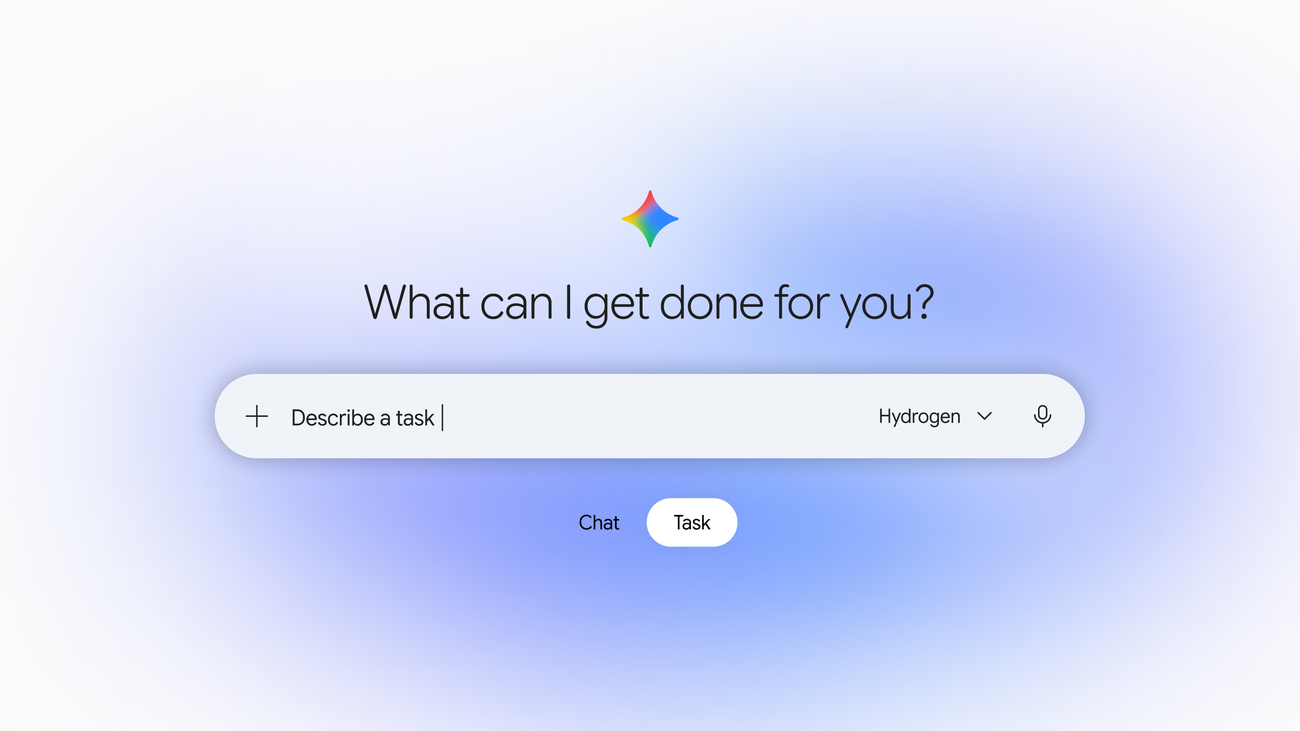
Google Opens Gemini Tasks Free to Six Countries Including US, Japan, and Korea, Enabling Calls and Payments
80 pts · 6 min read
Gemini 4 Neon Lands on OpenRouter: Tops Coding Agent Rankings, 32% Cheaper Per Task Than Carbon
72 pts · 5 min read
Gemini for Mac Launches Computer Use: Agent Can Execute Tasks Across Apps While Users Retain Control
71 pts · 5 min read
Google Brings Gemini 4 Hydrogen to Global Search, Calling It the Largest Model Upgrade Yet
66 pts · 5 min read