Ai2 Launches Theorizer Scientific Theory-Generation AI Agent on Asta Platform, Open-Sources Code
The agent retrieves literature and proposes candidate theories for unexplained observations, with every claim linked to supporting literature; Ai2 covers token costs within limits for the web version.
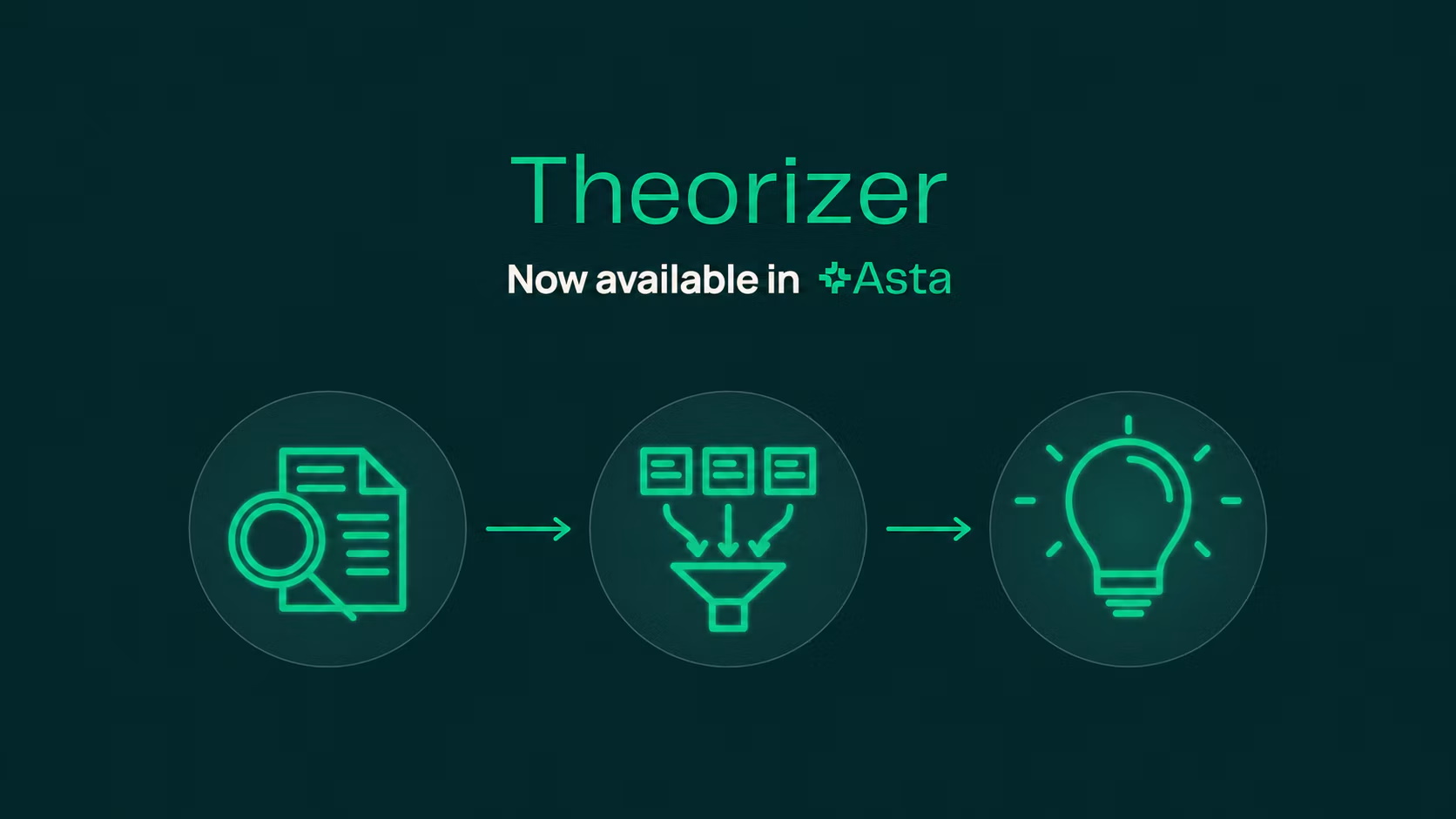
Table of Contents (3)
Key Takeaways (TL;DR)
- 01Ai2 launched Theorizer on the Asta platform, integrating literature discovery and theory generation into a single AI agent workflow.
- 02The tool demonstrates its use in lung cancer, neuroscience, and climate data cases, but it can miss literature and may misjudge originality.
- 03For the web version, Ai2 covers token costs within limits; the open-source library allows researchers to run it locally and pay for tokens themselves.
On November 19, Ai2 launched Theorizer on its scientific AI agent platform Asta. It can retrieve literature and propose candidate theories for unexplained observations, with every claim linked to supporting literature, and the code is open-sourced. For the web interface, Ai2 covers token costs within limits; users can also run the open-source library locally and pay for tokens themselves.
From Literature Retrieval to Candidate Theories: How Theorizer Works
On November 19, Ai2 announced the launch of Theorizer within its scientific AI agent platform Asta. The agent is designed for scientific research scenarios: after a user poses a question about an observation, it retrieves research literature and builds templates specifying what information to extract from each paper, such as the genes involved, how activity was measured, and the results of altering the genes. Theorizer then compares the extracted findings to generate candidate theories and links each claim to the underlying papers, allowing researchers to check the strength of support and whether experimental conditions are comparable.
Ai2 also open-sourced Theorizer's code, enabling researchers to inspect how it generates theories and adapt the method to their own work. When used through the Asta web interface, Ai2 covers token costs within limits; researchers who prefer to run it locally can use the open-source library and pay for token costs themselves. Ai2 says scientists have spent nearly a year testing the tool's theoretical output in their own research and plans to hold a webinar for scientists on December 10.
Ai2 notes that every claim from Theorizer is linked to supporting literature, but its search may miss earlier work, and the model may misjudge originality.
- Theorizer flags claims it considers novel, but its search may miss earlier work, and the model may misjudge originality.
- Researchers still need to compare claims against the broader literature and cannot rely solely on the tool's novelty judgments.
- Ai2 covers token costs within limits through the Asta web interface; local runs require users to pay for tokens themselves.
Lung Cancer Case: From Broad Questions to Testable Hypotheses
Sid Devarakonda, Medical Director of the Thoracic Oncology Clinical and Research Program at Providence Swedish Cancer Institute, used Theorizer to study "driver-negative" lung adenocarcinoma. These tumors account for about 20% to 30% of lung adenocarcinomas, and even comprehensive sequencing finds no known driver gene alterations. He asked Theorizer what was happening in the tumors and, after several iterations, received three candidate hypotheses: undetected genetic alterations activating RAS signaling, alternative cell-division mechanisms independent of RAS, and tumors acquiring features of other cell types.
Devarakonda and the Asta team then used AutoDiscovery to test these theories against public cancer genome atlas data. AutoDiscovery suggested that disruption of the DREAM complex, which normally suppresses cell division, may help explain tumor growth. Subsequent work using data from lab-grown cancer cells provided preliminary support for the hypothesis that some cancers with low RAS activity may depend on CDK2. These findings still require experimental validation, but they demonstrate Theorizer's utility in turning broad questions into specific hypotheses.
Neuroscience Evaluation: The Value and Limits of Evidence Integration
Jérôme Lecoq, an associate investigator at the Allen Institute, evaluated an early version of Theorizer on VIP interneurons. These brain cells inhibit the activity of other neurons, including inhibitory cells that normally suppress surrounding circuit activity. Theorizer returned 50 candidate theories about VIP interneurons, far more than the one or two Lecoq expected. One theory proposed that VIP interneurons adjust the brain's response strength to visual input depending on what the animal is attending to.
The core idea has been proposed in the literature, but Theorizer linked computational work with experimental findings to form an argument consistent with Lecoq's own understanding. Lecoq sees its value in integrating different lines of evidence and providing literature-based explanations that researchers can evaluate against their own understanding. This case also shows that the tool's output is not a novel discovery but a systematic reorganization of existing evidence.
The early version Lecoq evaluated returned 50 candidate theories, when he had expected only one or two.
- Theorizer returned 50 candidate theories on the VIP interneuron question, demonstrating its generative breadth.
- The core ideas of some theories already appear in the literature; the tool's role is integrating computational and experimental evidence.
- Researchers can use the output as a literature-based explanatory framework to compare against their own understanding.
Positioning and Limitations: The Supporting Role of Scientific AI Agents
Based on the cases Ai2 disclosed, Theorizer is positioned as a hypothesis-generation aid in the research workflow, not a replacement for researchers' judgment. It connects literature retrieval, information extraction, and theory generation into an inspectable workflow and uses citation links to let researchers assess the evidence base. Devarakonda compared using such tools to wearing an Iron Man suit: the suit is excellent, but someone still needs to be inside operating it, because the key is resource allocation and understanding what you are doing.
Ai2 explicitly notes the tool's limitations: its search may miss earlier literature, the model may misjudge originality, and researchers still need to check claims against the broader literature. These limitations mean Theorizer is better suited as a starting point for exploring and ranking hypotheses, and its output must be tested against molecular data and experimentally validated. For research institutions looking to bring AI agents into their scientific workflows, this case provides an evaluable reference sample.
Devarakonda likened such tools to an Iron Man suit: the suit is excellent, but someone still needs to be inside operating it.
- Theorizer outputs candidate theories that require data testing and experimental validation.
- The tool can miss literature and may misjudge originality, so researcher verification is essential.
- Ai2 lowers the barrier to use by open-sourcing the code and covering token costs within limits.
Impact
Industry Impact & Strategic Takeaways
For research institutions in the Asia-Pacific, Theorizer demonstrates a usable form for AI agents in literature-intensive hypothesis generation: the open-source code facilitates methodological review and local deployment, while the web version's covered token costs within limits lower the barrier to trial. Its explicit limitations of missed literature and misjudged originality also suggest that adopting scientific AI tools should be premised on researcher verification rather than directly trusting the output.
Frequently Asked Questions
What is Theorizer?
+
Theorizer is an AI agent launched by Ai2 on its scientific AI agent platform Asta. It can retrieve scientific literature and propose candidate theories for unexplained observations, with every claim linked to supporting literature, and its code is open-sourced.
Does using Theorizer cost money?
+
When used through the Asta web interface, Ai2 covers token costs within limits; if you run the open-source library locally, you need to pay for token costs yourself.
Can Theorizer's output be trusted directly?
+
No. Ai2 notes that its search may miss earlier literature and the model may misjudge originality. Researchers still need to check claims against the broader literature and validate candidate theories through data testing and experiments.
Primary Source & Attribution
Ai2 / Allen Institute for AI(RSS)
Theorizer comes to Asta
Related Deep Dives

browser-use 1.0 Launches: Replacing 24 Browser Actions with a Single Python REPL, Boosting Benchmark Scores and Slashing Costs
74 pts · 7 min read
Gemini 4 Neon Lands on OpenRouter: Tops Coding Agent Rankings, 32% Cheaper Per Task Than Carbon
72 pts · 5 min read

OpenAI and Cisco Launch Open-Source Linux Runtime Shirudo, Enabling AI Agents to Defend Systems Without Downtime
63 pts · 5 min read

Google Launches Tool Retrieval Preview in Gemini API: On-Demand Tool Schema Loading Solves Agent Scaling Challenges
62 pts · 6 min read