Nadella Explains Microsoft's Buyout Offer to 60,000 Employees: Transforming into an AI-First Organization, Not Layoffs
Speaking at the DealBook Summit, Microsoft's CEO said the buyouts are meant to give employees a choice in the AI transition, with future roles shifting toward managing AI agents.
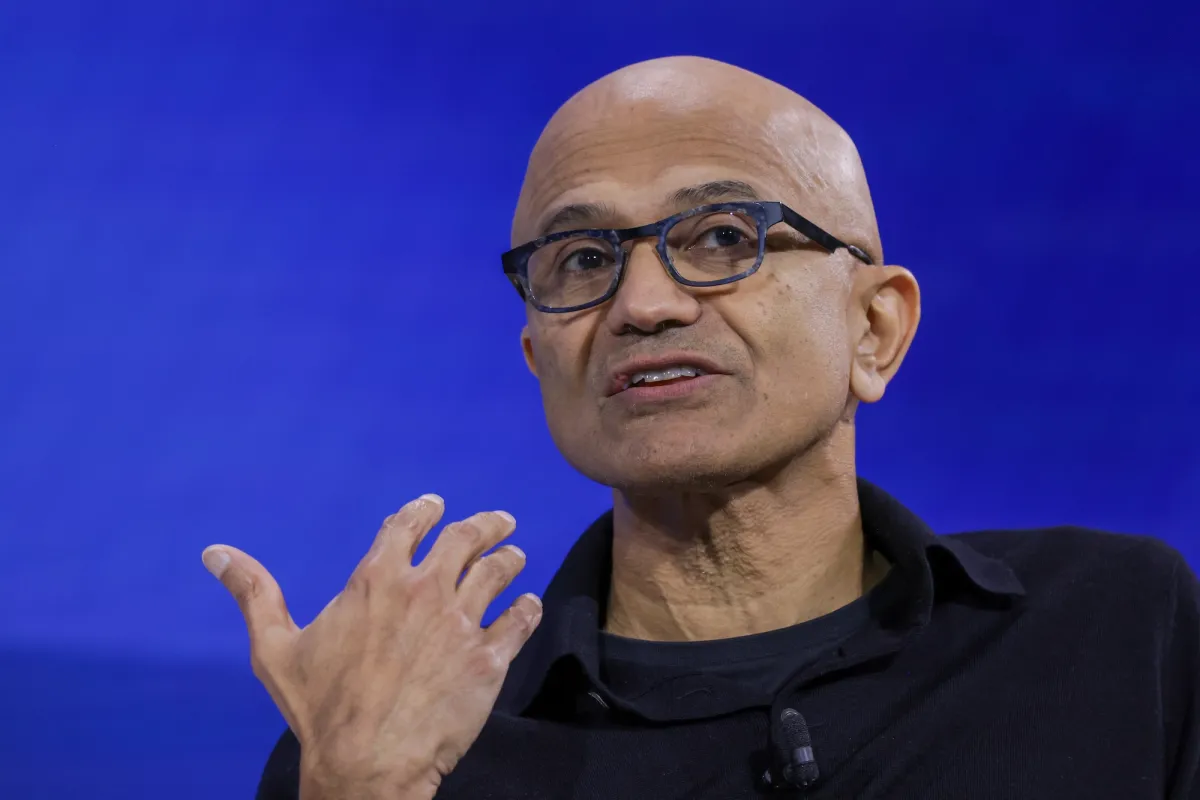
Table of Contents (3)
Key Takeaways (TL;DR)
- 01Nadella says the buyout program is meant to give employees a choice, not to cut headcount through mass layoffs.
- 02He cited the Cowork AI agent team in Microsoft 365, where 11 developers build a software factory with AI rather than developing products directly.
- 03Nadella believes all roles will eventually shift toward managing AI agents, but transformation at established companies will take longer than expected.
At the DealBook Summit, Microsoft CEO Satya Nadella explained that the buyout offer extended to 60,000 employees in October was intended to give workers a choice in the AI transition, not to replace them with AI. He said the goal is to restructure Microsoft into an organization where everyone uses AI and roles shift toward managing AI agents.
The Core Logic of the Buyout: Choice, Not Layoffs
Microsoft CEO Satya Nadella offered his first detailed explanation at the DealBook Summit of why the company offered buyouts to 60,000 employees in October. He said the move was not about replacing workers with AI, but about giving employees agency during the organization's transformation. Nadella told Andrew Ross Sorkin that the buyouts were meant to ensure that at least everyone felt they had a choice in the matter. The framing draws a clear distinction between the buyouts and traditional cost-cutting layoffs.
Nadella acknowledged that the rapid evolution of AI capabilities has created enormous anxiety among employees. He noted that discussions about the technological singularity and AI replacing all jobs have left even employees willing to change feeling uneasy. So the company chose to offer an exit option in the form of buyouts, while requiring those who stay to adapt to AI-first workflows. He stressed that structural adjustment must proceed, but it needs to be done in a way that gives employees opportunities.
Nadella said: the buyouts were meant to ensure that at least everyone felt they had a choice in the matter.
- The buyouts cover 60,000 employees, were offered in October, and are voluntary.
- Nadella says the purpose is to give employees a choice, not to directly replace human labor with AI.
- He acknowledged that rhetoric around the AI revolution has caused significant anxiety among employees.
Redefining the Software Engineering Role
Nadella used software engineering as an example of how work is evolving. He traced how industry perceptions moved from doubting whether AI could write software, to fearing AI would replace software engineers, to rediscovering that software engineering remains vibrant and will thrive. He noted that what has changed is the way teams are organized and what software engineers do, with a new operating baseline emerging—not the disappearance of the role itself.
He added that for some employees, this restructuring and change is quite difficult, but the adjustment must happen. The remarks suggest Microsoft views the AI transition as a systemic organizational engineering effort, not merely the deployment of technical tools. The software engineer's role is shifting from writing code directly to using AI to complete development workflows and overseeing output quality.
The Cowork Team Case: 11 Developers Building a Software Factory
Nadella cited the team behind Cowork, an AI agent in Microsoft 365 applications, to illustrate how an AI-first organization works. The team consists of just 11 developers who are adept at using AI to get work done. Nadella described them as building a software factory that produces products, rather than building the products directly. The case is used to demonstrate how AI agents are changing the size and division of labor in development teams.
He extrapolated that in the future every employee will become a manager of AI agents rather than a direct executor of work. Nadella believes this kind of directing and orchestrating layer will become widespread across all roles. The judgment positions AI agents as the basic execution units of the organization, with human employees responsible for setting goals, overseeing processes, and accepting results—forming a new division of labor between humans and machines.
Nadella noted: these 11 developers are building a software factory that produces products; they don't build the products directly.
- The Cowork team consists of 11 developers who build a software factory with AI to produce products.
- Nadella predicts all roles will eventually shift toward managing AI agents.
- Human employees' responsibilities shift toward directing and orchestrating rather than directly executing specific tasks.
The Time Cost of Transformation at Established Companies
Nadella candidly noted that Microsoft, as a 51-year-old company, did not grow up as an AI-first organization. He posed the question of how quickly an existing company can change its work content, workflows, and work artifacts, along with the corresponding compensation support systems. He said the transformation will take longer than anyone expects, and inevitably some employees will choose other paths.
The remarks reveal the structural constraints large tech companies face in the AI transition. Unlike AI-native companies, mature enterprises must drive process reengineering on top of existing organizational structures, compensation systems, and talent profiles. Nadella's comments suggest Microsoft views the transformation as a multi-year systemic effort, with the buyout program just one component.
Industry Reaction and Transformation Signals
Nadella made similar remarks earlier on The Pragmatic Engineer podcast to Gergely Orosz, saying the company's framing of the AI revolution had created enormous anxiety among employees, leaving people feeling they had no control over their own destinies. He criticized predictions about the technological singularity and AI replacing all jobs, arguing such rhetoric leaves even employees willing to change feeling uneasy. He called for responding to employee concerns with concrete structural adjustments and role arrangements.
Taken together, the two public statements send a clear signal about Microsoft's buyout program: employees can choose to adapt to the new AI-first work model, or they can choose to leave. The approach is a bellwether for large tech companies, showing that AI agent deployment is moving from technical experimentation into organizational design. Market observers are watching whether other tech companies will follow with similar workforce restructuring.
Nadella said: the way we talked about the AI revolution created enormous anxiety in people's minds about not being in control of their own destiny.
- On the podcast, Nadella criticized singularity and full-replacement predictions for creating employee anxiety.
- The buyout program is seen as part of Microsoft's organizational transformation, not mere workforce reduction.
- The case offers a reference for how large tech companies can drive AI-first transformation.
Impact
Industry Impact & Strategic Takeaways
Microsoft's buyout program and Nadella's explanation offer the Asia-Pacific AI industry an organizational template for large enterprises pursuing AI agent deployment. The core takeaway is that AI transformation is not just a technology selection issue but also involves synchronized adjustments to workflows, role definitions, and compensation systems. For enterprises in markets such as Singapore and Malaysia, managing employee expectations and the pace of transformation while introducing AI agents will be a key challenge in digital transformation.
Frequently Asked Questions
Why did Microsoft offer buyouts to 60,000 employees?
+
Nadella said the buyouts are meant to give employees agency during the AI-first organizational transformation, not to directly replace them with AI. Employees can choose to adapt to the new work model or leave voluntarily.
How does Nadella describe AI's impact on software engineering roles?
+
He cited the Cowork team, where 11 developers build a software factory with AI to produce products. He believes software engineering remains vibrant, but team organization and engineers' work content have reached a new operating baseline, and future roles will shift toward managing AI agents.
What challenges does Microsoft's AI transformation face?
+
Nadella noted that Microsoft, as a 51-year-old company, did not grow up AI-first. The transformation involves comprehensive adjustments to work content, processes, and artifacts, will take longer than expected, and inevitably some employees will choose other paths.
Primary Source & Attribution
TechCrunch:AI(RSS)
Microsoft CEO Satya Nadella explains why he asked 60K employees to quit
Related Deep Dives
Nvidia CEO Jensen Huang Steps Down; Microsoft CEO Nadella Says He Still Has Confidence in Nvidia Team
81 pts · 5 min read

Conductor 0.97.0 Released and Joins Meta: Local Workspace Agents Add Inline HTML Artifacts
60 pts · 4 min read
Meta Internal Chats Show Employees Warned Early About Muse AI Agent Privacy Risks
79 pts · 6 min read
MIT and Microsoft Paper: Junior Software Engineer Hiring Falls About 40% After GitHub Copilot Adoption
77 pts · 4 min read