Anthropic's Pre-IPO Heavyweight Backers: The Investment Logic of Notable Capital, GIC, and Baillie Gifford
Three institutions doubled down against valuation controversy and competitive pressure, as Anthropic completed the largest IPO in history at $81.3 billion
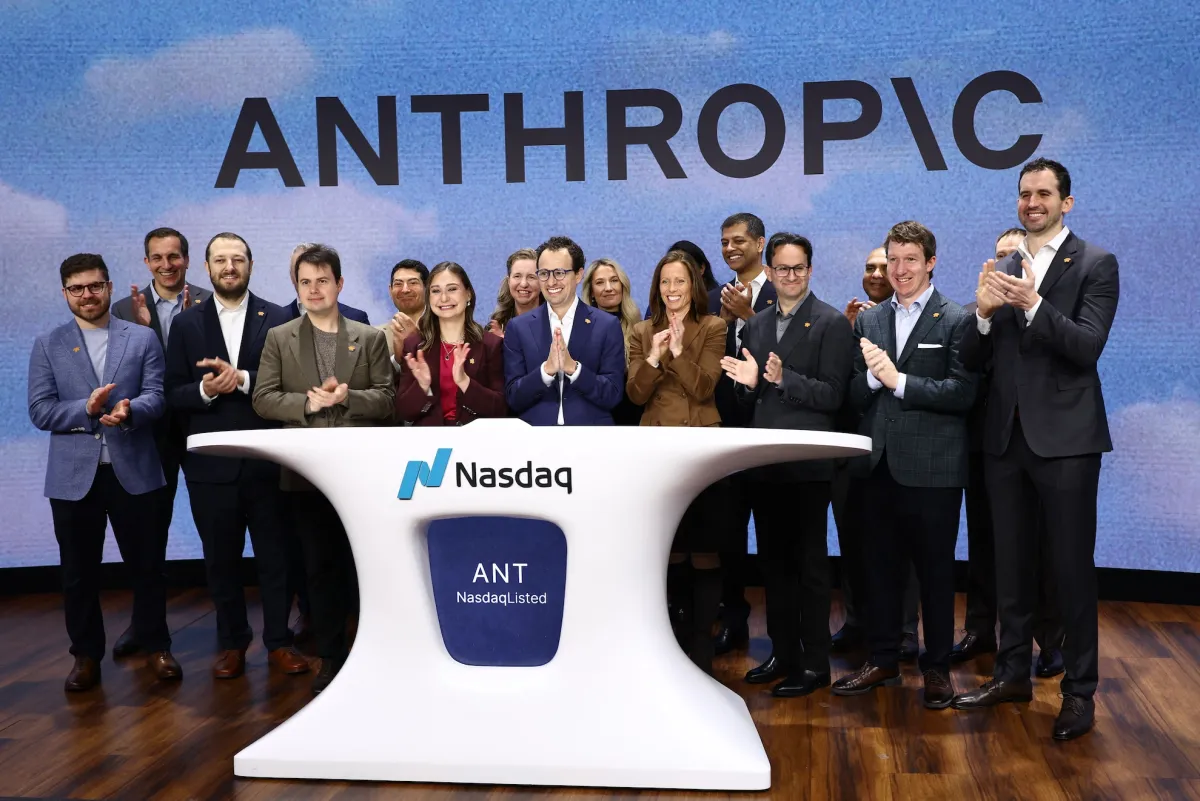
Table of Contents (3)
- 01Notable Capital: A Reversal in Developer Preference Underpinned the Conviction Bet
- 02GIC: From a Restaurant Meeting to More Than $4.5 Billion Across Three Rounds
- 03Baillie Gifford: Betting on Execution Consistency After Nearly Two Years of Research
- Industry Impact & Strategic Takeaways
- Frequently Asked Questions
Key Takeaways (TL;DR)
- 01Notable Capital deployed roughly 10% of its U.S. fund into Anthropic's Series E at a $61.5 billion valuation, ultimately realizing about a 15x paper return.
- 02Singapore's GIC invested more than $4.5 billion across three funding rounds, holding about 1% after the IPO.
- 03Baillie Gifford invested for the first time in Series F after nearly two years of observation, committing $1.5 billion cumulatively and emphasizing execution consistency and gross margin performance.
Notable Capital, GIC, and Baillie Gifford each made substantial investments in Anthropic ahead of its IPO, ultimately securing considerable paper returns in the $81.3 billion offering. The three firms based their decisions on developer preference, enterprise adoption rates, and execution consistency, making their bets at a time of elevated valuations and intensifying competition.
Notable Capital: A Reversal in Developer Preference Underpinned the Conviction Bet
In Anthropic's Series E, Notable Capital allocated roughly 10% of the U.S. portion of a fund exceeding $1 billion to the company. The decision puzzled many limited partners at the time: the maker of Claude was still chasing its largest competitor, OpenAI, and DeepSeek had released its R1 model just weeks earlier, posing a potential threat to closed-source rivals. Moreover, Anthropic's valuation stood at $61.5 billion, the highest-valued investment in the firm's 25-year history.
Yet after analyzing the data, the team—including managing partners Hans Tung and Glenn Solomon and principal Dan Cahana—found that developers were spending 70% of their time using Claude, a reversal from the prior year. Hans Tung told TechCrunch that developers are central to AI because they are the early adopters. The firm, formerly GGV Capital and renamed in 2024 after splitting off its China business, also drew on its team's firsthand experience with the complexities of U.S.-China relations to conclude that mission-critical work would always require closed-source models based in the United States.
Hans Tung said: "We just knew that developers are central to AI because they are the early adopters."
- Notable Capital deployed roughly 10% of its U.S. fund into Anthropic's Series E at a $61.5 billion valuation.
- The investment thesis included developers spending 70% of their time using Claude, a reversal from the prior year.
- The firm was formerly GGV Capital and was renamed in 2024 after splitting off its China business.
From Skepticism to a Roughly 15x Paper Return
Less than two years later, Notable's limited partners are no longer questioning the outsized bet. Anthropic completed an $81.3 billion IPO on Wednesday, setting the record for the largest initial public offering in history at a fully diluted valuation of about $1.5 trillion, with shares beginning trading the next day. On that basis, Notable's paper return is roughly 15x. The firm is not alone in reaping enormous paper gains from Anthropic; even traditional late-stage investors, who rarely see venture-capital-style multiples, are set for substantial returns.
GIC: From a Restaurant Meeting to More Than $4.5 Billion Across Three Rounds
Singapore's GIC studied Anthropic throughout 2024 but did not make its first investment until early 2025. At the time, Chris Emanuel, the fund's head of technology investing, met with Anthropic CFO Krishna Rao at Che Fico, an Italian restaurant in San Francisco. Rao showed Emanuel that model improvements were driving enterprise adoption higher, sparking his interest. GIC then made its first move in Anthropic's Series F, announced in September 2025 at a $183 billion valuation.
Emanuel told TechCrunch that Claude Code had just launched at the time—too early to draw conclusions—but even then there were signals of its popularity among developers. GIC's confidence in the AI lab was high enough that it subsequently co-led Anthropic's Series G alongside Coatue at a $380 billion valuation, and again participated as one of the co-leads in the pre-IPO round at a $96.5 billion valuation. According to people familiar with GIC's finances, the firm invested more than $4.5 billion in Anthropic across the three rounds, holding about 1% after the IPO.
Chris Emanuel said: "Claude Code had just launched at the time—too early to draw conclusions—but even then we could see signals of its popularity among developers."
- GIC's first investment was in Anthropic's Series F, announced in September 2025 at a $183 billion valuation.
- GIC later co-led the Series G with Coatue at a $380 billion valuation and participated in the pre-IPO round at a $96.5 billion valuation.
- Cumulative investment across three rounds exceeded $4.5 billion, with about 1% ownership after the IPO.
A Sovereign Fund's Long-Term Allocation to AI Infrastructure
GIC's investment cadence shows that the Singaporean sovereign wealth fund treats frontier AI labs as a long-term strategic allocation rather than a short-term financial speculation. From Series F to the pre-IPO round, GIC kept increasing its bet as valuations climbed round after round, serving as lead or co-lead in Series G and the pre-IPO round. This willingness to stay engaged during a period of rapidly rising valuations is consistent with its positioning as a long-term capital provider.
Baillie Gifford: Betting on Execution Consistency After Nearly Two Years of Research
Before making its first investment in Anthropic's Series F, Lilian Li, head of U.S. growth investing at Baillie Gifford, had studied the company and engaged with its team for nearly two years. Li told TechCrunch that Baillie Gifford decided to invest in the Claude developer only when the company consistently executed on its vision while generating strong revenue and attractive gross margins. This decision framework emphasizes verifiable operating metrics rather than mere market hype.
After Baillie Gifford's initial investment, Anthropic continued to deliver, expanding into legal services and life sciences and launching broader applications such as Cowork and cybersecurity. Li said that with everything changing so quickly, it is truly remarkable how consistent the company has been. Baillie Gifford invested $1.5 billion cumulatively across three rounds, a bet that has generated substantial paper gains for the investment manager and for dozens of backers who entered at valuations that seemed astonishingly high to other investors.
Lilian Li said: "With everything changing so quickly, it is truly remarkable how consistent they have been."
- Baillie Gifford had researched Anthropic for nearly two years before its first investment.
- The investment thesis included execution consistency, strong revenue, and attractive gross margins.
- It invested $1.5 billion cumulatively across three funding rounds.
Reassessing Risk and Reward for Late-Stage Investors
Baillie Gifford's case shows that traditional late-stage investors are reassessing the risk-reward structure in the AI era. The firm entered when Anthropic's valuation was already high, but based on its judgment of the company's execution pace and revenue quality, it still achieved significant paper gains. This, together with Notable's early conviction bet based on developer data and GIC's continued increases anchored in enterprise adoption, forms three typical paths for institutional investors betting on frontier AI labs at moments of controversy.
Impact
Industry Impact & Strategic Takeaways
Anthropic's $81.3 billion IPO sets a new benchmark for the global AI financing market. For Asia-Pacific investors, GIC's participation shows that sovereign funds are incorporating frontier AI labs into long-term allocations; for tech companies, developer usage, enterprise adoption, and execution consistency have become key bases for institutional valuation, rather than model parameters or short-term hype alone. The case may also influence regional capital's due diligence frameworks and holding periods for AI startups.
Frequently Asked Questions
What was the size and valuation of Anthropic's IPO?
+
Anthropic completed an $81.3 billion IPO on Wednesday, setting the record for the largest initial public offering in history at a fully diluted valuation of about $1.5 trillion, with shares beginning trading the next day.
How much did GIC invest in Anthropic, and what is its ownership stake?
+
According to people familiar with GIC's finances, the firm invested more than $4.5 billion across Series F, Series G, and the pre-IPO round, holding about 1% after the IPO.
Why did Notable Capital make a large bet in Anthropic's Series E?
+
Notable Capital found that developers were spending 70% of their time using Claude, a reversal from the prior year, and believed mission-critical work would always require U.S.-based closed-source models, so it deployed roughly 10% of its U.S. fund into the round.
Primary Source & Attribution
TechCrunch:AI(RSS)
How Notable Capital, GIC, and Baillie Gifford bet big on Anthropic before its IPO
Related Deep Dives
Anthropic Debuts on Nasdaq at $111, 33% Above IPO Price
90 pts · 5 min read

Anthropic Lands on Nasdaq: Dario Amodei Rings the Opening Bell as the Community Jokes His Clapping Looks AI-Generated
86 pts · 4 min read
Anthropic's IPO Tests the Sustainability of AI Circular Financing
85 pts · 5 min read
Anthropic Completes Largest IPO in History, LTBT Governance Structure Under Scrutiny
84 pts · 6 min read